
International · Andalusia
The Islamic Heritage of Andalusia: A History Route from the Mezquita to the Alhambra
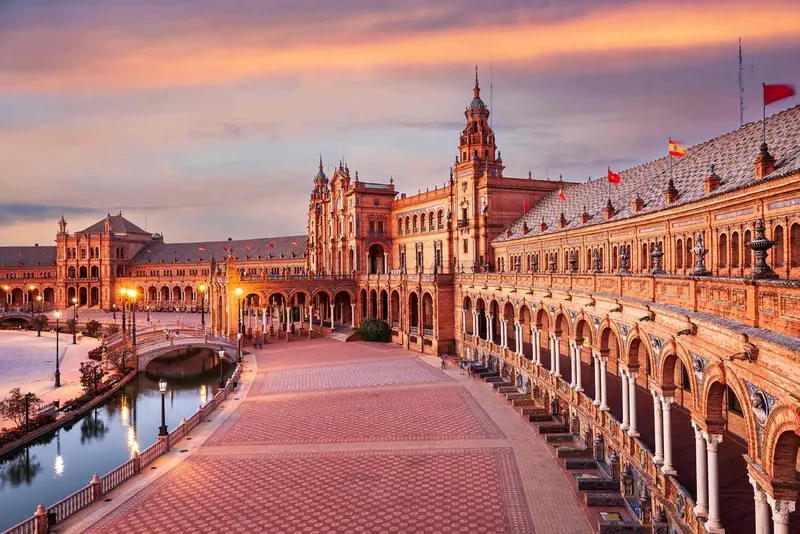
Four cities are enough to see the traces of the Islamic period in Andalusia: in Córdoba, the Mezquita, the masterpiece of the Umayyad era; in Seville, the Giralda, a minaret turned bell tower, and the Real Alcázar in the Mudéjar style; in Granada, the Alhambra, palace of the Nasrids; and in Toledo, the medieval city where different faiths lived side by side. Visiting these buildings in turn is like following, from start to finish, a story of nearly eight centuries that began in 711 and ended with the surrender of Granada in 1492.
A short history: eight centuries in three sentences
In 711, Muslim armies crossed the Strait of Gibraltar and entered the Iberian Peninsula. The name Gibraltar is known to derive from the Arabic name meaning "Mountain of Tariq", after the commander Tariq ibn Ziyad. Over the following centuries, the Umayyad state centred on Córdoba became first an emirate and then a caliphate, turning into one of the most brilliant cultural centres in Europe.
After the caliphate broke up, the region was divided into small states, and the Almoravids and Almohads, of North African origin, gained power in the south. As the Christian kingdoms advanced southwards, Toledo, Córdoba and Seville changed hands in turn. The last Muslim state, the Nasrid Emirate of Granada, surrendered to the Catholic Monarchs Isabella and Ferdinand in 1492.
Córdoba: the Mezquita and the capital of the caliphate
The Mezquita-Cathedral
Córdoba's Great Mosque is the Mezquita, officially used as a cathedral today. Construction began in the Umayyad period, and the building was enlarged several times by later rulers. When you step inside, you are greeted by a vast forest of columns topped by double-tiered arches of alternating red brick and white stone.
One of the most striking parts of the Mezquita is the mihrab and the gold-ground mosaics around it. Craftsmen from Byzantium are said to have played a part in making these mosaics, a detail of particular interest to visitors from Istanbul. In the Christian period a cathedral nave was inserted into the middle of the building, so today two different architectural worlds are intertwined under the same roof.
A city of science and philosophy
Córdoba is also known as the birthplace of the philosopher and physician Averroes (Ibn Rushd) and the Jewish thinker Maimonides (Musa ibn Maymun). A statue of Maimonides stands in the Judería quarter around the Mezquita. These details are a reminder that Andalusia was a centre of learning that nourished thinkers of different faiths.
Seville: traces of the Almohads and Mudéjar art
The Giralda
The Giralda, the bell tower of Seville Cathedral, was originally the minaret of the great mosque built in the Almohad period. In the Christian period a Renaissance-style belfry was added on top. The decoration on the lower part of the tower is known for its similarity to minarets of the same period in Morocco. The mosque's courtyard also lives on today as the Courtyard of the Orange Trees (Patio de los Naranjos).
The Real Alcázar
The Real Alcázar is a palace that shows how the Andalusian heritage lived on in the Christian period. The sections built for the kings of Castile use the decorative language of Muslim and Mudéjar craftsmen: carved plaster, colourful tiles, wooden ceilings and courtyards with pools. This style is called Mudéjar and is regarded as a synthesis unique to Spain.
Granada: the Alhambra and the last Nasrid capital
The Alhambra Palace
The Alhambra takes its name from the Arabic word for "red"; the reddish colour of its walls explains the name. The complex consists of a fortress (the Alcazaba), the Nasrid palaces and the Generalife gardens, whose name is thought to come from an Arabic phrase.
What awaits you in the Nasrid palaces:
- The Court of the Lions: The palace's best-known corner, with stone lions supporting the fountain in its centre.
- Wall inscriptions: The Nasrid dynasty's motto "Wa la ghaliba illa Allah" (There is no victor but God) is repeated again and again on the palace walls.
- Muqarnas ceilings: Plaster decoration layered like a honeycomb plays with light and shadow.
- Water: Pools, fountains and channels run throughout the palace; the most elegant examples of Andalusian garden culture are here.
Visits to the Alhambra are subject to quotas and tickets often sell out in advance. So the visit should be planned early.
The Albaicín
The Albaicín, on the hill opposite the Alhambra, is Granada's old Muslim quarter. Full of narrow lanes, white houses and walled garden houses called "cármenes", this neighbourhood shows the everyday counterpart of the palace.
Toledo: a city of coexistence
Toledo is one of the major Andalusian cities taken by the Christians early on. In the city, a small Andalusian mosque, synagogues and churches stand in the same historic centre. Toledo is also known for its translation activity, in which Arabic works were translated into Latin; these translations are considered to have played an important role in bringing ancient Greek philosophy to Europe.
Travelling this route
The Madrid and Andalusia Tour links Toledo, Seville, Córdoba and Granada in 4 nights, 5 days: on the second day you travel via Toledo to Seville, and on the fourth day via Córdoba to Granada. The catalogue lists only the daily route; whether visits with quotas such as the Alhambra can be added to the programme is confirmed in the quote depending on the date and ticket availability.
Groups who want to link it to history, religious culture or art history lessons can design this route as an on-site lesson. Our article When to visit Spain can help you choose the season.
Frequently asked questions
How long did the Islamic period last in Andalusia?
It was a period of nearly eight centuries, beginning in 711 and ending with the surrender of Granada in 1492. During this time the political structure and borders changed many times.
Is the Mezquita a mosque or a cathedral today?
The building is used as a cathedral today and its official name is the Mezquita-Cathedral. Visitors can see both the parts from the Islamic period and the cathedral nave added later.
How long does it take to visit the Alhambra?
A visit including the Nasrid palaces, the Alcazaba and the Generalife gardens usually takes a few hours. Entry to the Nasrid palaces is usually by the time slot stated on the ticket.
What does Mudéjar mean?
It is a term used for Muslims living under Christian rule. In art, it refers to the style unique to Spain in which the Islamic decorative tradition continued in Christian buildings.