Türkiye · Yedigöller
Yedigöller Photography Guide: Lake Reflections, Mist and Autumn Light
There are three keys to good photos at Yedigöller: reflections on the lake surface in a windless moment, soft light filtering through the forest and leaves changing colour in autumn. The shores of large lakes such as Büyükgöl and Deringöl are ideal for reflections, and the forest paths between the lakes for light and colour. You can capture striking shots even with a phone; what matters is where and when you look.
Get to know the park through a photographer's eyes
There are seven lakes in Yedigöller National Park: Büyükgöl, Deringöl, Nazlıgöl, Seringöl, Sazlıgöl, İncegöl and Küçükgöl. The lakes were formed by landslides and are linked by streams and small waterfalls. In the surrounding forest, deciduous trees such as beech, oak, hornbeam and alder mingle with conifers such as black pine, Scots pine and fir.
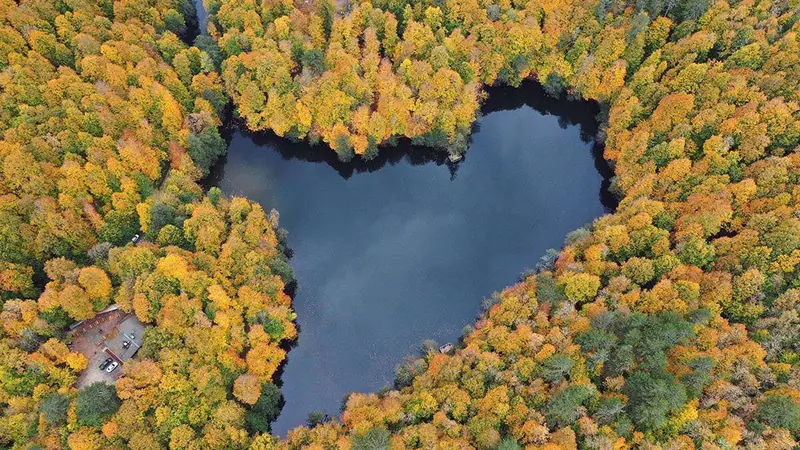
For photography, this is a very valuable mix. In autumn, while the deciduous trees turn yellow, orange and red, the conifers stay dark green. So, unlike a single-coloured forest, you get layered, high-contrast shots.
Where to shoot
The shore of Büyükgöl
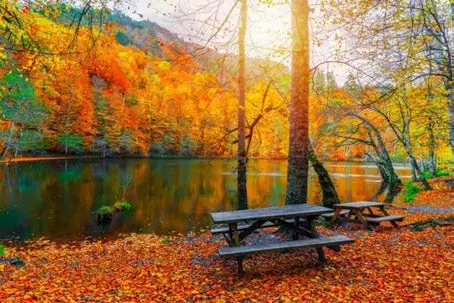
Büyükgöl, one of the largest lakes in the park, is the first place that comes to mind for reflection photos. Standing on the shore and framing the forest on the opposite slope together with its reflection in the water is one of Yedigöller's best-known images. To strengthen the reflection, try holding the camera low, close to the water.
Deringöl and Nazlıgöl
These quieter, more enclosed lakes are good for framed compositions using tree branches in the foreground. Overhanging branches on the shore or leaves fallen into the water add depth to the shot.
Seringöl and the smaller lakes
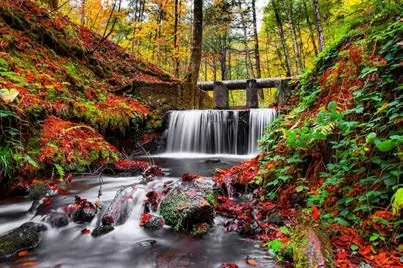
The shores of the smaller lakes offer quiet shots away from the crowds. The streams and small waterfalls between the lakes are an opportunity to try long exposures.
Forest paths
On the walking paths between the lakes, the carpet of leaves on the ground, shafts of light filtering between the tree trunks and mossy logs make beautiful shots independent of the lakes. In autumn, the path itself can be the subject: try a composition where the path runs from the middle of the frame off into the distance.
When to shoot
- Early morning: there may be mist on the lakes and there is usually less wind. This is the best time for both mysterious misty shots and smooth reflections.
- Midday: the light can be harsh. At this time, work in shaded areas inside the forest or on close-up leaf photos rather than on the open lakeshore.
- Afternoon: as the sun gets lower the light warms up, and autumn leaves glow in this light.
- Cloudy days: soft, evenly spread light makes autumn colours look more saturated. Don't see cloudy weather as a disadvantage.
If you're going on a day trip, the earliest and latest hours of the day will be spent on the road. On the Yedigöller Tour programme, you arrive at the park in the morning, take a walk of about two hours with breaks through the forest and then have about two hours of free time. This free time is a good chance to go back to spots that caught your eye on the walk and take photos at a relaxed pace.
Tips for shooting with your phone
- Lock the exposure: tap and hold the lake on the screen to fix focus and exposure, so a bright sky doesn't darken the shot.
- Keep the horizon straight: a tilted horizon stands out immediately in lake photos. Turn on your phone's grid.
- Don't neglect close-ups: a single red leaf, a water droplet or some moss sometimes says more than the landscape.
- Use the wide angle carefully: a wide-angle lens is good for getting the lake and sky together, but it distorts the edges.
- Try a vertical frame: tall tree trunks and reflections can look more striking in portrait orientation.
If you're bringing a camera
- A polarising filter reduces glare on the water surface or strengthens the reflection; rotate it to adjust the effect.
- For a silky water effect on the streams, a small tripod and a long exposure work well. Bear in mind that you'll carry the tripod throughout the walk, and choose a light model.
- It can be dark inside the forest; don't hesitate to raise the ISO as much as you need.
Shot ideas by season
- Autumn: red and yellow leaves reflected in the water, the carpet of leaves on the ground, a single dark green fir among colourful trees.
- Spring: light filtering through pale green leaves, rushing streams and small waterfalls.
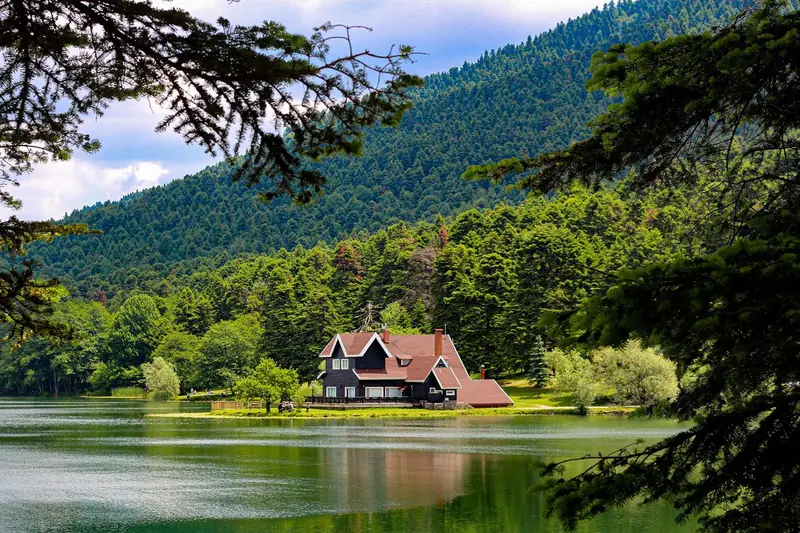
- Summer: shady paths, families picnicking by the lake, different shades of green.
- Winter: snow-covered trees and frozen lake surfaces. In the winter months, access depends on road and snow conditions.
Respect for nature
- Stay on the paths; don't trample the vegetation for a good shot.
- Don't try to approach or feed animals to photograph them.
- Take your rubbish home and don't litter the lakeshores.
If you'd like to know which season offers which scenery before coming to take photos, our article When to visit Yedigöller will help.
Frequently asked questions
Which lake at Yedigöller is best for photos?
With its wide surface and the reflection of the forest on the opposite slope, Büyükgöl is one of the most photographed lakes. Deringöl, Nazlıgöl and Seringöl offer quieter, framed compositions.
What is the best time of day for photos at Yedigöller?
Early morning is ideal for mist and smooth reflections, and the afternoon for warm light and glowing autumn leaves. At midday, choose shaded areas inside the forest.
Can you fly a drone at Yedigöller?
Drone use in national parks may be subject to permits and rules. If you're thinking of bringing a drone, check the current rules with official sources before you travel.
Can you take good photos of Yedigöller with a phone?
Yes. With simple steps such as locking the exposure, keeping the horizon straight and trying close-up shots of leaves, you can take very good photos with your phone too.