
 4 nights, 5 days
CERN and Airbus Tour
Montpellier, Toulouse, Avignon, Geneva
From Ottoman heritage to the Adriatic coast, a comprehensive Balkan journey that links eight countries in one route.
The price is prepared according to your dates, group size and preferences.
The route runs from Sofia and Belgrade to Sarajevo. On the fourth day, after Mostar, Blagaj and Počitelj, you continue to Trebinje.
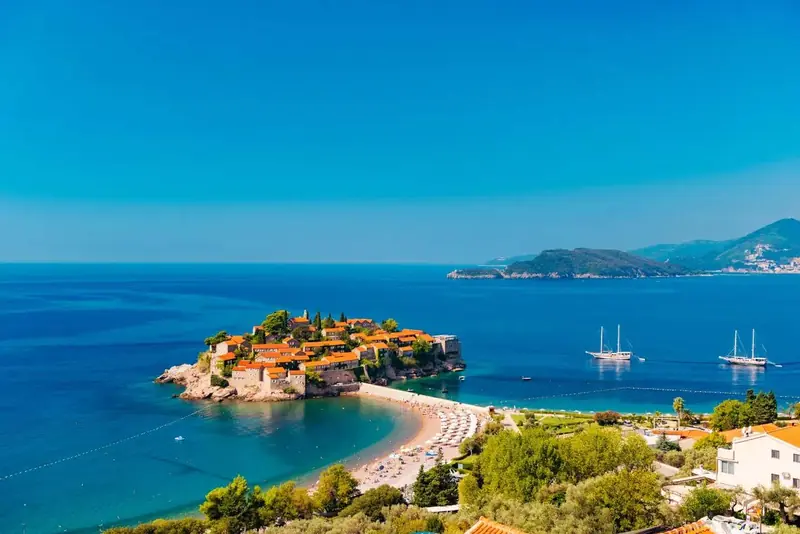
On the fifth day you tour the Adriatic coast with Dubrovnik, Kotor and Budva; the night is spent in Podgorica or Shkodër.
The return route takes in Tirana, Elbasan, Ohrid, Tetovo (Kalkandelen), Skopje, Thessaloniki and Kavala.
Send us your dates and group size for the Grand Balkans and we will tailor the programme to your group.
The daily route follows the programme in the catalogue. A detailed itinerary is shared with the quote.
The capital of Bulgaria. The Alexander Nevsky Cathedral, completed in the early 20th century, the 16th-century Banya Bashi Mosque attributed to Mimar Sinan, and the Roman-era remains of Serdica stand side by side in the city centre.
The capital of Serbia, set where the Sava and Danube rivers meet. Belgrade Fortress, overlooking the rivers, and the surrounding Kalemegdan Park are the city's main historic area; pedestrianised Knez Mihailova Street is the main axis of the centre.
The capital of Bosnia and Herzegovina. Baščaršija, which grew up in the Ottoman period, and the Gazi Husrev Bey Mosque, completed in 1531, form the heart of the old town. The city was the scene of the assassination of Archduke Franz Ferdinand in 1914 and of the 1984 Winter Olympics.
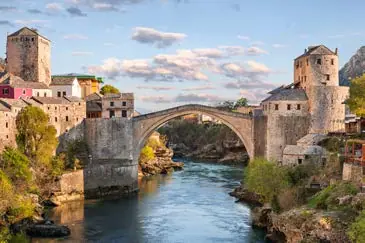
The Old Bridge (Stari Most) over the River Neretva was built in 1566 in the Ottoman period, destroyed during the war in 1993 and rebuilt in 2004. The area around the Old Bridge was added to the UNESCO World Heritage List in 2005.
Near Mostar, the Blagaj Tekke, an Ottoman-era Sufi lodge, stands beside the spring where the River Buna emerges from the foot of a cliff. The tekke and the area around the spring are protected as a national monument in Bosnia and Herzegovina.
A historic town on a hillside by the River Neretva, about 30 km south of Mostar. Fortified in the 15th century, the town came under Ottoman rule in 1471; it is known for its stone houses, its fortress and its 16th-century Ottoman buildings.
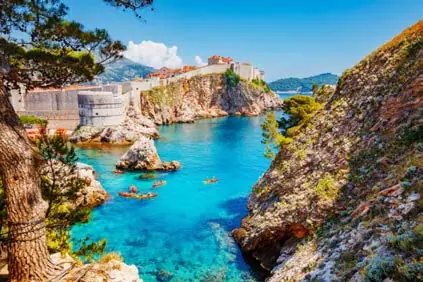
On the Adriatic coast, the walled Old Town of Dubrovnik was historically the centre of the Republic of Ragusa. The old town was added to the UNESCO World Heritage List in 1979; a walkway along the top of the walls encircles the city.
A medieval town at the foot of the mountains in the inner part of the Bay of Kotor. The Natural and Culturo-Historical Region of Kotor was added to the UNESCO World Heritage List in 1979; Venetian-era walls climb the slope above the town.
A town on Montenegro's Adriatic coast with a history of about 2,500 years. The walled Old Town stands on a small peninsula; its historic fabric, damaged in the 1979 earthquake, was restored by 1987. With its beaches, it is a summer holiday resort.
The capital of Albania since 1920. Around Skanderbeg Square in the city centre stand the Et'hem Bey Mosque, begun in the late 18th century and completed in the early 19th century, and the Clock Tower.
This town on the shore of Lake Ohrid is known for its churches and its ancient theatre. The natural and cultural heritage of the Ohrid region was added to the UNESCO World Heritage List for its natural values in 1979 and its cultural values in 1980.
The capital of North Macedonia, set on the banks of the River Vardar. The Ottoman-era Stone Bridge, the Old Bazaar, the Mustafa Pasha Mosque and the Fortress make up the city's historic fabric; Mother Teresa was also born in Skopje in 1910.
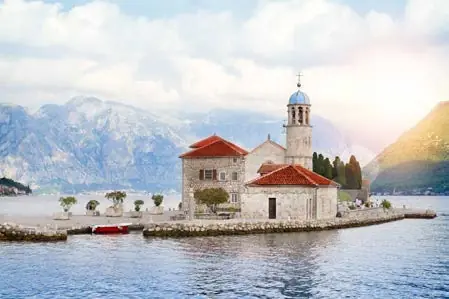
The catalogue has no separate list of included services for this tour. The scope of transport, accommodation, guiding and meals is set out in writing in the quote.
May to June and September are the best periods; July and August are beach season on the Adriatic coast, but hot and crowded.
| Country | Visa (Turkish citizens) | Currency | Time difference | Language |
|---|---|---|---|---|
| Bulgaria | Schengen visa required (Bulgaria has been a full Schengen member since 2025) | Euro (EUR), from 1 January 2026 | 1 hour behind Türkiye in winter; same time during summer time | Bulgarian |
| Serbia | No visa needed for tourist visits (up to 90 days within 180 days) | Serbian dinar (RSD) | 2 hours behind Türkiye in winter; 1 hour behind during summer time | Serbian |
| Bosnia and Herzegovina | No visa needed for tourist visits (up to 90 days within 6 months) | Bosnia and Herzegovina convertible mark (BAM) | 2 hours behind Türkiye in winter; 1 hour behind during summer time | Bosnian, Serbian, Croatian |
| Croatia | Schengen visa required | Euro (EUR) | 2 hours behind Türkiye in winter; 1 hour behind during summer time | Croatian |
| Montenegro | Visa-free for up to 30 days until 31 October 2026; a visa is required from 1 November 2026 (holders of a valid Schengen, US, UK or Irish visa or residence permit for these countries can enter visa-free for up to 30 days) | Euro (EUR) | 2 hours behind Türkiye in winter; 1 hour behind during summer time | Montenegrin |
| Albania | No visa needed for tourist visits (up to 90 days) | Albanian lek (ALL) | 2 hours behind Türkiye in winter; 1 hour behind during summer time | Albanian |
| North Macedonia | No visa needed for tourist visits (up to 90 days) | Macedonian denar (MKD) | 2 hours behind Türkiye in winter; 1 hour behind during summer time | Macedonian, Albanian |
| Greece | Schengen visa required | Euro (EUR) | 1 hour behind Türkiye in winter; same time during summer time | Greek |
Visa and entry requirements may change; check the current situation with the relevant consulate before you travel.
Visa and passport requirements vary by country, passport type and date. We share the current requirements at the quote stage; as application times can be long, we recommend planning early.
The route in the catalogue passes through Bulgaria, Serbia, Bosnia and Herzegovina, Croatia, Montenegro, Albania, North Macedonia and Greece.
Overnight stops are planned according to the route; the catalogue gives Podgorica or Shkodër as the options for the 5th night. Hotel details are given in the quote.
May to June and September are the best periods; July and August are beach season on the Adriatic coast, but hot and crowded.
What is covered for transport, guiding, admission fees and meals is stated in writing in the quote, according to your dates, group size and preferences. Services marked as extras in the catalogue are charged separately.
Dates are planned according to group requests and the season. Tell us your preferred period and group size, and we will share suitable date options with the quote.
Get a quote
Tell us your dates, group size and, if applicable, your school or organisation details, and we will prepare the programme and price for your group and get back to you.
Travel agency with licence number A-12881, since 2012
International Tours
4 nights, 5 daysMontpellier, Toulouse, Avignon, Geneva
 4 nights, 5 days
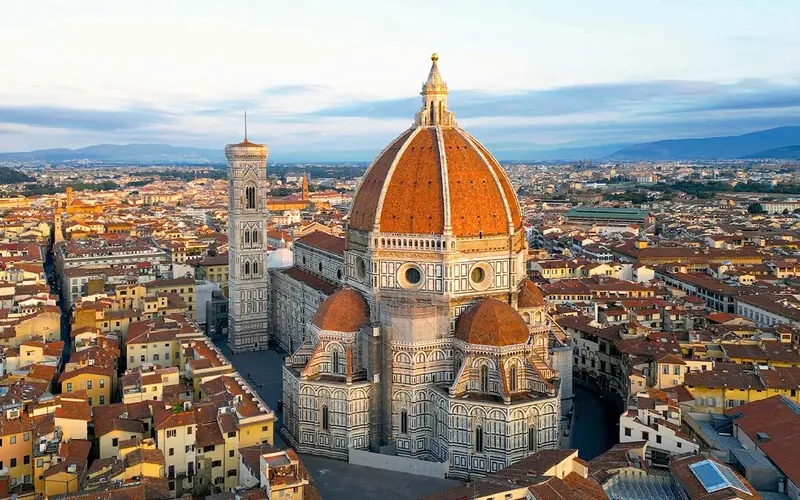
Florence, Pisa, Siena, San Gimignano
 4 nights, 5 days
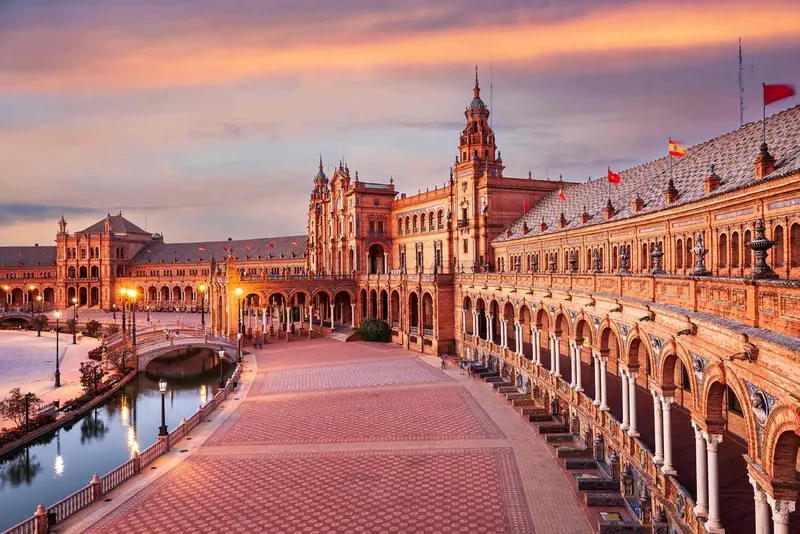
Madrid, Toledo, Seville, Córdoba