Türkiye · Cappadocia
Cappadocia's Valleys: What to See from Ihlara to Devrent
For first-time visitors to Cappadocia, four valleys stand out: Ihlara for walking and rock-cut churches, Pigeon Valley for the views, Paşabağ for its mushroom-shaped fairy chimneys and Devrent for rock formations that spark the imagination. All four are part of day two of our Cappadocia tour. Below we explain what awaits you in each valley and how it is visited.
How did the valleys form?
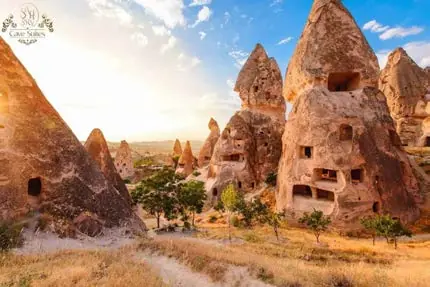
The story of the region's valleys begins millions of years ago with the ash and lava erupted by Erciyes, Mount Hasan and the surrounding volcanoes. Over time this material turned into a soft rock called tuff. As rain, wind and rivers wore away the soft tuff, the harder layers on top remained like caps; this is how fairy chimneys came about. The same softness made it easy for people, over centuries, to carve homes, churches and storerooms into the rock. Every hollow you see in the valleys is a trace of these two processes: nature and people working together.
Ihlara Valley: walking and rock-cut churches
Ihlara, within the province of Aksaray, is a green valley where the Melendiz River flows through a deep canyon. Eyes used to Cappadocia's dry, pale landscape are met here by trees, the sound of water and cool air.
You descend into the valley by steps and walk along the river. Many churches are carved into the rock walls; on our tour you see the Ağaçaltı Church and the Yılanlı (Snake) Church. The Yılanlı Church takes its name from the snake figures in its frescoes.
Tips:
- Comfortable, non-slip shoes are a must for the steps and the path.
- In summer the valley floor can feel cooler than its surroundings; a light extra layer comes in handy.
- The walking pace isn't very demanding, but going up and down the steps can tire your knees.
Pigeon Valley: at the foot of Uçhisar
Stretching just below Uçhisar Castle, this valley takes its name from the countless dovecotes carved into the rocks. In the past, local people carved these nests to collect pigeon droppings to use as fertiliser in their vineyards and gardens. Today, from the viewpoints along the edge of the valley, you can see both the dovecotes and Uçhisar Castle rising behind them in the same shot.
Our tour includes a photo stop at Uçhisar Castle and Pigeon Valley. It is a short stop, but the views are striking.
Paşabağ (Monks' Valley): mushroom-shaped fairy chimneys
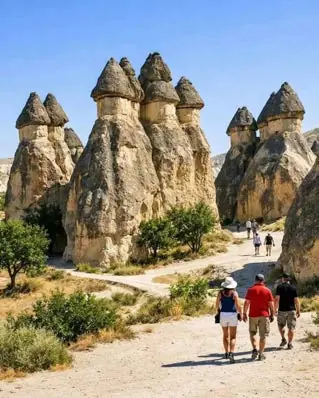
The best-known examples of the multi-capped, mushroom-shaped fairy chimneys that come to mind when people think of Cappadocia are in Paşabağ. The valley is also called Monks' Valley, because monks who withdrew into seclusion in the early Christian period settled in these rocks.
Paşabağ is explored on short, level paths, so it is comfortable for families with children and older visitors too. As you wander among the fairy chimneys, you can see small rooms carved into the rock.
Devrent Valley: the valley of imagination
There are no churches or houses in Devrent; what makes the valley special are the shapes the rocks have taken. Visitors try to spot figures such as a camel, a dolphin or the Virgin Mary in the rocks. The most famous is the camel-shaped rock. That is why the valley is also called “Imagination Valley”.
Its pink and reddish rocks look especially beautiful in the afternoon light. If you are going with children, the “who can find which animal” game is the favourite activity here.
Ürgüp and the Üçgüzeller
After Devrent, the programme includes a panoramic view of Ürgüp and the Üçgüzeller (Three Beauties) fairy chimneys. This group of three capped fairy chimneys is considered the symbol of Ürgüp and takes on a different colour as sunset approaches.
Well-known valleys not in the programme
Cappadocia has many other valleys too: Güllüdere and Kızılçukur are known for their sunsets, Zemi and Love Valley for their long hiking trails. These valleys are not part of our catalogue programme. If your group wants a walking-focused programme, we can look at it together at the quote stage.
Practical notes for visiting the valleys
- Shoes: Most valleys are dusty and rocky in places. Choose trainers or light walking shoes.
- Water and sun: There is little shade in summer; keep a hat and water with you.
- Respect: The frescoes in the rock-cut churches are fragile. Don't touch them, and follow the rules on flash photography.
- Time: The Ihlara walk is the longest part of the day; the other valleys are visited with shorter stops.
Photographing the valleys
Cappadocia's rocks are very sensitive to light. The midday sun flattens the colours, while morning and late-afternoon light brings out pinks, creams and reds. Because the programme's stops are spread across different times of day, you see each valley in slightly different light.
- Ihlara: Light is limited inside the canyon; wide shots taken from above, at the top of the steps, show the depth of the valley better.
- Pigeon Valley: Keep the valley in the foreground with Uçhisar Castle in the background.
- Paşabağ: Step in among the fairy chimneys and shoot from low down looking up to convey their scale.
- Devrent: The camel-shaped rock reads more clearly if you photograph it from the side.
When taking photos, take care to stay on the path and not to climb on the rocks; tuff erodes easily, and protecting the rocks is everyone's responsibility.
Frequently asked questions
Which valley in Cappadocia is good for walking?
The Ihlara Valley, with its path running along the river, stands out for walking. Because you go down and up steps, you need comfortable shoes.
What is the difference between Paşabağ and Devrent?
Paşabağ is known for its mushroom-shaped fairy chimneys with rooms carved into them. Devrent has no carved structures; what draws attention are the rock shapes resembling animals and figures.
How many valleys does the tour visit?
The programme includes the Ihlara, Pigeon, Paşabağ and Devrent valleys, plus the Üçgüzeller in Ürgüp. You can find the day-by-day plan in our 3-day Cappadocia itinerary article.
Are the valleys suitable for children?
Paşabağ and Devrent are easy with children, as they are explored on short, level walks. The steps at Ihlara can be a little tiring for young children.