Türkiye · Cappadocia
Derinkuyu and Kaymaklı: A Guide to Cappadocia's Underground Cities
Cappadocia's underground cities are shelters carved level by level into soft volcanic rock, where people could hide in times of danger along with their animals and supplies. The two most visited are Derinkuyu and Kaymaklı; our Cappadocia tour visits one of them. As there are narrow, low passages inside, knowing what to expect before you go makes things easier.
What is an underground city?
An underground city is a system of rooms, storerooms, stables and ventilation shafts that descends below the surface, linked by tunnels. Cappadocia's tuff is easy to carve but hardens as it is exposed to air. This property allowed local people to open up living space both upwards into the fairy chimneys and downwards, deep into the ground.
Many underground cities are known in the region; some are large complexes thought to be linked to one another by tunnels, while others are small shelters beneath villages.
Who built them, and why?
No one knows for certain when the underground cities were first carved. Historians believe the earliest sections go back a very long way and were expanded in later centuries. The period of most intensive use is generally considered to be the centuries when Christian communities living in the region in Byzantine times took refuge here to protect themselves from raids.
The aim was not to live underground permanently but to stay safe until the danger had passed. That is why the underground cities were designed with everything needed to keep daily life going:
- Ventilation shafts: These carry fresh air to the depths, and some also served as wells.
- Rolling stone doors: Large, wheel-shaped stones rolled across the mouths of passages. They were closed from the inside and very hard to open from the outside.
- Stables: Animals were usually kept on the upper levels.
- Kitchens, wineries and storerooms: Spaces carved out to store supplies and food.
- Places of worship: The lower levels have sections that were used as churches.
Derinkuyu Underground City
Derinkuyu is known as one of the deepest and largest underground cities in the region. As visitors explore levels that descend one below the other, they pass through narrow stairways and sloping tunnels. The further down you go, the cooler the air becomes, staying at a constant temperature. The large ventilation shaft and the rolling stone doors are the features that attract the most interest at Derinkuyu.
Kaymaklı Underground City
Kaymaklı lies close to Derinkuyu and is thought to be connected to it by tunnels. Its corridors are wider and it spreads out more horizontally. Here you can see more clearly the shared spaces used by a village community living beneath the same hill. Because it does not go quite as deep as Derinkuyu, it is seen as a comfortable option for first-time visitors to an underground city.
Which one does our tour visit?
Day two of our programme includes Derinkuyu (or Kaymaklı) Underground City. Which one is visited depends on the flow of the day and how busy they are; both offer a similar experience. The same day's programme also includes the Ihlara Valley walk, Uçhisar, Avanos and the fairy chimney valleys.
What awaits you inside?
- Narrow, low passages: In some tunnels you need to stoop as you walk. Tall visitors should mind their heads.
- Crowds: At busy times, some sections are walked in single file and you may need to wait.
- Cool air: In summer it is noticeably cooler inside than outside. Bring a light top layer.
- Directions: The visitor route is signposted; stay with the group and do not leave the marked area.
Who might find it difficult?
The narrow stairs and low tunnels can be challenging for people with claustrophobia, breathing difficulties or knee problems. In that case, you can stay on the upper levels of the underground city or wait at the entrance. Simply let your guide know in advance.
It is not a place for pushchairs; for young children, carrying them in your arms or in a baby carrier is more practical.
Photography is allowed, but light inside is limited; rather than wide shots, focusing on details such as a rolling stone door or a ventilation shaft gives better results.
Why do they matter for school groups?
The underground cities show students geography and history in one place: the volcanic origin of the rock, the need for access and security, and how communities organised themselves in difficult conditions. We explain how this can be linked to lesson content in our Cappadocia school trip guide.
A short checklist before your visit
Visiting an underground city is a short but intense experience. Running through these points before you go in makes things easier:
- Leave large backpacks on the coach; they can get caught in the narrow passages.
- A small bag that leaves your hands free is enough.
- You usually won't need your phone torch, but keep your phone with you.
- Make sure the children in your group walk in front of an adult.
- When taking photos, take care not to block the way for people behind you.
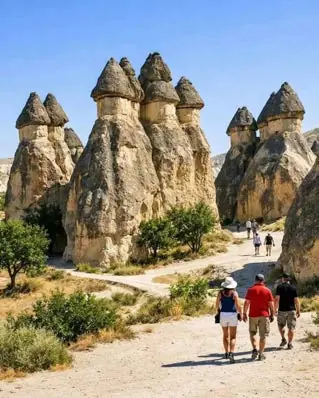
When you come back up after exploring these structures, the fairy chimneys and rock houses you see are another use of the same rock. To make that connection, have a look at our Cappadocia valleys guide too.
Frequently asked questions
Which is better to visit, Derinkuyu or Kaymaklı?
Both offer a similar experience. Derinkuyu goes deeper, while Kaymaklı spreads out more horizontally and is a little easier to explore. On our tour, one of them is visited depending on the flow of the day.
How long does a visit to an underground city take?
It depends on the size of the group and how busy it is inside. On our tour, the underground city is one of several stops on the same day and is planned so as to leave time for the rest of the day.
I'm claustrophobic. Can I still go in?
The upper levels are wider and brighter. If you find it difficult, you can turn back or wait at the entrance. Just let your guide know in advance.
What should I wear in an underground city?
Comfortable, non-slip shoes and a light top layer are enough. It is cool inside even in summer.