International · Italy
Places to Visit in Italy: Rome, Florence, Venice and the Towns of Tuscany
If you are going to Italy for the first time, the backbone of the route usually has four stops: Rome for the ancient city, Florence for the Renaissance, Venice for the canals and the Tuscan towns in between (Pisa, Siena, San Gimignano). If you have time, Naples and Pompeii in the south and Bologna in the north complete the picture. Below you will find what is really worth seeing in each city and what to prioritise on a short programme.
Rome: a capital like an open-air museum
Every street you walk in Rome feels like a passage from one era to another. The priority list for the first day is short and clear:
- Colosseum and Roman Forum: The heart of the imperial era. Walking among the ruins of the Forum, you will see the senate house, temples and the remains of triumphal arches.
- Pantheon: With light pouring in through the opening at the centre of its dome, it is known as one of the buildings to have survived from the ancient world in remarkably good condition.
- Trevi Fountain and the Spanish Steps: Two stops close to each other for an early evening stroll. The tradition of throwing a coin into the fountain with your back to it is still very popular.
- Vatican: Technically a separate state, but inside Rome. St Peter's Basilica and the Vatican Museums, which include the Sistine Chapel, usually mean long queues; planning your visit in advance is important.
Do not limit Rome to its monuments. The narrow streets and small squares of the Trastevere neighbourhood make a good evening option for seeing the city's everyday side.
Florence: birthplace of the Renaissance
Florence is a small, walkable and packed city. You can explore most of the historic centre on foot.
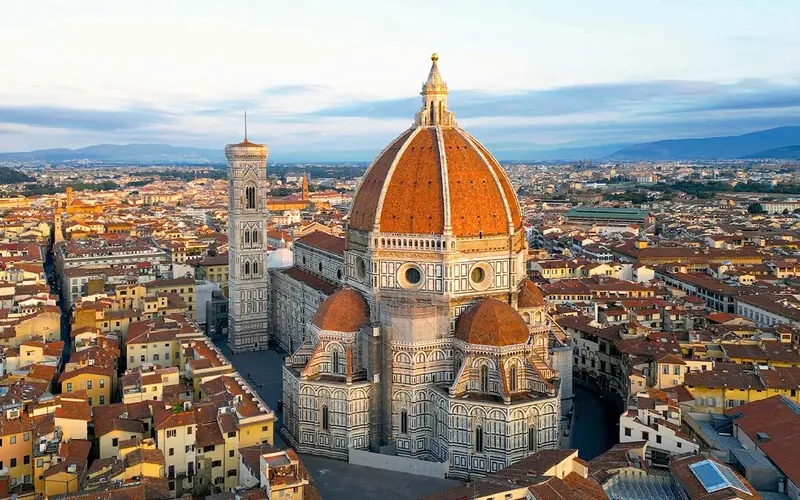
- Duomo (Santa Maria del Fiore): Brunelleschi's dome is the symbol of the city. Next to it, the bell tower and baptistery stand on the same square.
- Piazza della Signoria and Palazzo Vecchio: A square full of statues, like an open-air gallery.
- Ponte Vecchio: The historic bridge lined with jewellers' shops. Looking at it from the Arno River at sunset is a special pleasure.
- Uffizi and Accademia: Masterpieces of the Renaissance, from Botticelli to Michelangelo's David. Take a look at our guide to Italy's museums, where we cover them in detail.
Tuscan towns: Pisa, Siena and San Gimignano
With Florence as your base, you can see three famous Tuscan towns on day trips.
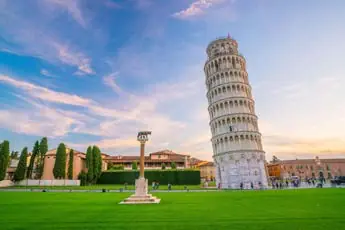
Pisa is synonymous with its leaning tower, which stands with the cathedral and baptistery in the Square of Miracles (Piazza dei Miracoli). The visit is usually short, but never without a photo stop.
Siena is known for its shell-shaped Piazza del Campo. The Palio horse race held in this square in summer symbolises the deep-rooted rivalry between the town's districts. Its Gothic cathedral is also a must-see.
San Gimignano, with its stone towers, is like a postcard from the Middle Ages. Being small, it is easy to walk around in a few hours; the view of the Tuscan hills from its walls is the town's real gift.
Naples and Pompeii: a short escape to the south
Pompeii is a Roman city buried under ash by the eruption of Mount Vesuvius in AD 79. With its streets, houses, bakeries and wall paintings, it is one of the rare ways to see how daily life went on in the ancient world. Comfortable shoes are essential: the ground is stony and uneven, and there is little shade.
Naples is crowded, noisy and extremely lively. Known as the home of pizza, trying a Neapolitan pizza is almost compulsory, even on a short stop.
Venice: canals and squares
There are no cars in Venice; you get around on foot, by the water buses called vaporetti or by gondola.
- St Mark's Square and Basilica: The heart of the city, with its Byzantine-influenced mosaics.
- Doge's Palace and the Bridge of Sighs: The seat of government of the Venetian Republic.
- Rialto Bridge: The best-known bridge over the Grand Canal, together with the market around it.
Putting the map away for a while and getting lost in the back streets is the easiest way to find the quiet corners of Venice, away from the tourist crowds.
Bologna: the stop most people skip
Bologna is home to one of the oldest universities in the Western world and is known for its arcaded streets (portici). It is also one of the important centres of Italian cuisine. It may look like a city you just pass through on the way to the airport, but it deserves at least a short walk.
Seeing these stops on one tour
The Classic Italy Tour is a 4 nights, 5 days programme with hotel accommodation. You reach Florence via Bologna, and on the second day, based in Florence, the programme includes Pisa, Siena and San Gimignano. On the third day you move on to Rome; Naples and Pompeii are planned in connection with this day, and the exact scope is stated in writing at the quote stage. On the fourth day you go to Venice, and on the last day you return via Bologna.
If you would like to see Italy as part of a wider European route, the Grand Europe Tour also passes through Rome, Pisa and Florence. If you are wondering how many days are enough, our how many days are enough for Italy article can guide you.
Frequently asked questions
Which cities should a first-time visitor to Italy see?
Rome, Florence and Venice are the essential trio for a first visit. If time allows, the Tuscan towns and Pompeii add depth from different periods to the route.
How much time should you allow to see Pisa?
A few hours are enough to see the tower, cathedral and baptistery in the Square of Miracles from outside. Pisa is usually visited as part of a day trip from Florence.
Do you need a separate document to visit the Vatican?
The Vatican is inside Rome, and visitors usually pass directly from Rome. Even so, before your trip to Italy, check the visa and entry requirements with the official sources of the country concerned and the Ministry of Foreign Affairs of the Republic of Türkiye.
Do you have to take a gondola ride in Venice?
No. A vaporetto ride along the Grand Canal is also an enjoyable and practical way to see the city from the water.