International · Japan
Places to Visit in Japan: From Tokyo to Kyoto, Nara and Osaka
If you are going to Japan for the first time, the backbone of the route is usually the same: Tokyo for modern Japan, the Mount Fuji area for nature and scenery, Kyoto and Nara for historical and religious heritage, and Osaka for street food and nightlife. These four areas are linked by high-speed train, so you can see very different sides of the country on a single trip. Below you will find what not to miss at each stop and where you can go further if you have time.
Tokyo: many cities in one
Tokyo is not a city with a single centre; it is a collection of districts, each with its own character. So "seeing Tokyo" really means choosing districts.
- Asakusa and Senso-ji: One of Tokyo's oldest temples. The giant lantern at the Kaminarimon gate and the Nakamise shopping street leading up to the temple are among the rare corners where you can feel the city's old Edo era.
- Meiji Jingu: The Shinto shrine dedicated to Emperor Meiji stands inside a large forest in the middle of the city. Once you pass through the great wooden torii gate, the sound of traffic suddenly fades.
- Harajuku: Right next to Meiji Jingu, this is home to Takeshita Street, known for its youth fashion and colourful streets.
- Shibuya: The Shibuya crossing, known as one of the busiest pedestrian crossings in the world, and the statue of the loyal dog Hachiko.
- Shinjuku: Skyscrapers, illuminated billboards and the Golden Gai streets with their tiny bars. Coming in the early evening lets you see it at its liveliest.
If you have time, Ueno Park and its museums, Akihabara with its electronics and anime shops, and the Tsukiji outer market with its fish and seafood stalls are also commonly added stops.
Mount Fuji and Kawaguchiko
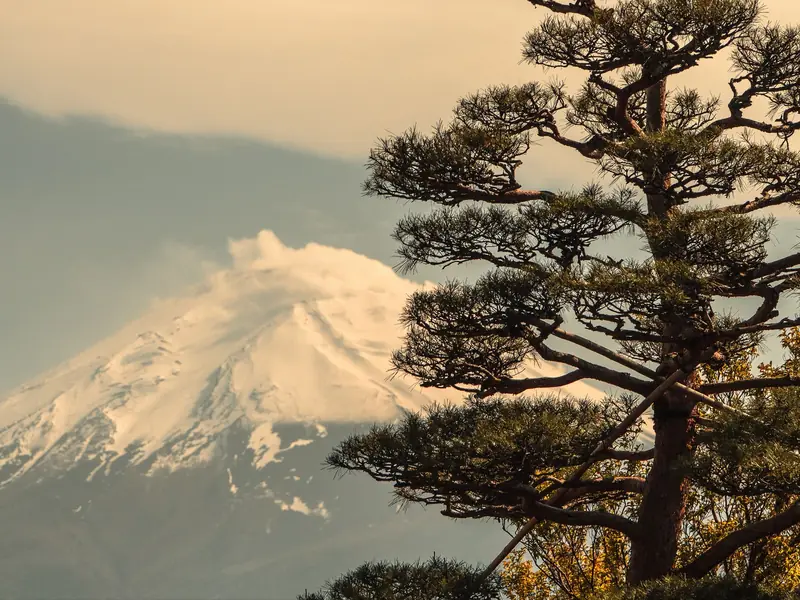
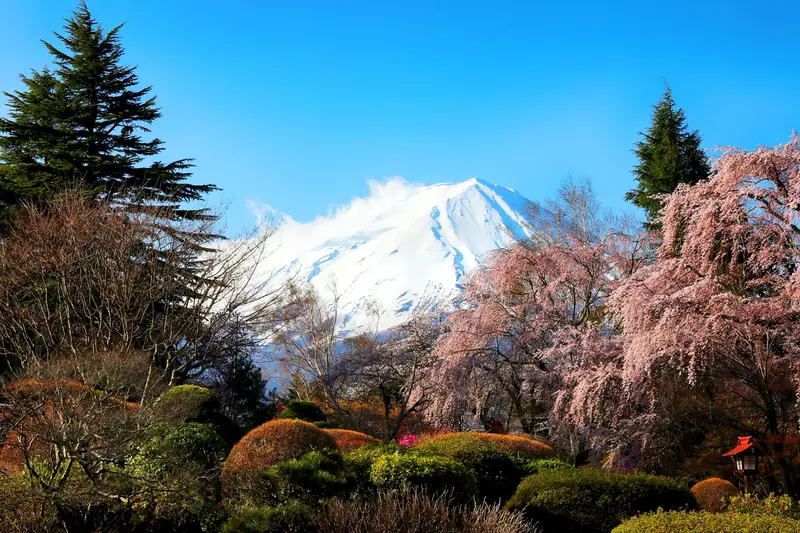
Mount Fuji (Fujisan in Japanese) is Japan's highest mountain and the symbol of the country. Kawaguchiko, in the Fuji Five Lakes area that you can reach on a day trip from Tokyo, is one of the most popular places for viewing the mountain from the lakeshore.
The one thing you need to know is this: Fuji hides in the clouds very easily. In clear weather the view is extraordinary, but it is also possible to leave without seeing the mountain at all. Mornings are usually luckier, and the sky is clear more often in the winter months. We cover your chances of a view by season in our when to go to Japan article.
Hakone is another popular choice around Fuji: it is known for its hot springs (onsen), lake boats and open-air museum.
Kyoto: city of a thousand temples
Kyoto, the imperial capital for centuries, is considered the heart of Japan's traditional culture. The city has a great many temples and shrines; these stand out on a first visit:
- Fushimi Inari Taisha: With thousands of orange torii gates climbing the mountainside, this is one of Japan's best-known sights. The higher you climb between the gates, the thinner the crowds.
- Kiyomizu-dera: A historic Buddhist temple overlooking the city from its wooden terrace. The Sannenzaka and Ninenzaka streets leading up to the temple preserve the fabric of old Kyoto.
- Kinkaku-ji (Golden Pavilion): Its gold-covered pavilion reflected in the pond is Kyoto's postcard image.
- Arashiyama bamboo grove: A path through tall bamboo on the west side of the city. Much quieter early in the day.
- Gion: A district synonymous with geisha culture, with its traditional wooden houses and teahouses. Respecting people's personal space when taking photos here is important.
Nara: deer and the giant Buddha
Nara, close to Kyoto, was one of Japan's first permanent capitals. The giant bronze Buddha at Todai-ji temple and the great wooden hall that houses it are well worth seeing. The deer roaming freely in Nara Park are the city's best-loved residents. When you give them the special crackers on sale, you will see some deer bow their heads as if to "greet" you; still, remember that they are wild animals, and keep a firm hold on your bag and papers.
Osaka: food and nightlife
Osaka is known as Japan's "kitchen". With its illuminated signs along the canal and its takoyaki (octopus dough balls) and okonomiyaki stalls, Dotonbori is ideal for an evening stroll. Osaka Castle and the park around it are a good option for the daytime. We cover the food side in detail in our Japanese food culture article.
Stops to add if you have time
Places often recommended that fall outside a first route:
- Hiroshima and Miyajima: The Peace Memorial Park and museum, followed by Itsukushima Shrine, known for its great torii gate standing in the sea.
- Nikko: Ornate shrine buildings set in forests north of Tokyo.
- Kamakura: Close to Tokyo, with a great open-air Buddha statue and a seaside town feel.
- Takayama and Shirakawa-go: Old streets and steep-roofed traditional village houses in the mountains.
- Hokkaido: In the north, a separate journey in itself, with snow in winter and cool nature in summer.
Which places are on our tour?
TatiliYakala's Japan tour is a new 6 nights, 8 days programme not yet in the catalogue. The route starts in Tokyo with Asakusa and Senso-ji, followed by Meiji Jingu, Harajuku, Shibuya and Shinjuku. On the fourth day there is a day trip to the Fuji area and the Kawaguchiko lakeshore. After travelling to Kyoto by Shinkansen, you visit Fushimi Inari Taisha, Kiyomizu-dera, Kinkaku-ji, Arashiyama and Gion. The last days include Todai-ji and the deer park in Nara and Dotonbori in Osaka in the evening; the return is from Osaka. We clarify the details for your group together at the quote stage.
Frequently asked questions
Which cities should first-time visitors to Japan see?
Tokyo, Kyoto and Osaka are the essential trio for a first route. Add a day trip to the Mount Fuji area and Nara, which is easy to reach from Kyoto, and you will have seen both modern and historic Japan.
Is Mount Fuji always visible?
No. The mountain is often hidden behind clouds. Your chances of a view are usually higher in winter and in the morning, but nothing is guaranteed in any season.
What can you see in Kyoto in one day?
You can comfortably see two or three areas in a day; for example, Fushimi Inari in the morning, Kiyomizu-dera at midday and Gion in the evening. As Kinkaku-ji and Arashiyama are at different ends of the city, they are often left for a second day.
Do you need to set aside a separate day for Nara?
No. As Nara is close to Kyoto and Osaka, Todai-ji and the deer park can easily be seen on a half-day or one-day trip.