Istanbul trips · Rahmi M. Koç Museum
Rahmi M. Koç Museum Travel Guide: What's There and How to Visit
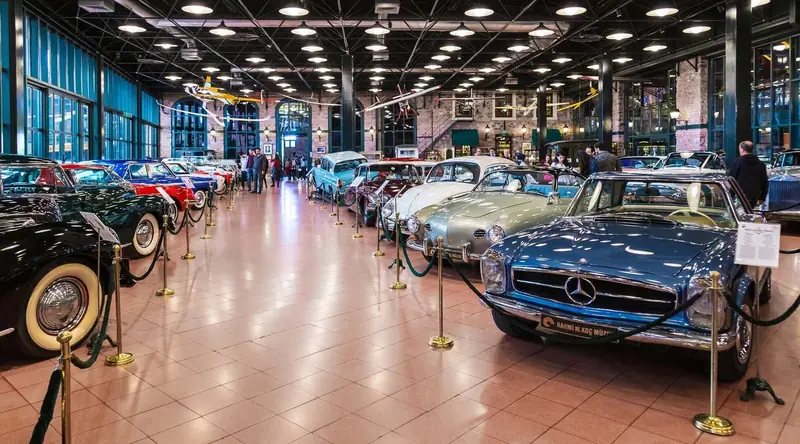
The Rahmi M. Koç Museum, on the Hasköy shore of the Golden Horn, is devoted to the history of transport, industry and communication: trains, cars, aircraft, boats, engines and scientific instruments are all on display in one place. As the collection is large, getting the most out of your visit depends on choosing in advance which sections to focus on. If you are going with a school or family group, a guided visit focuses the children's attention on the right exhibits.
Where is the museum and what is it like?
The museum is in Hasköy, in the Beyoğlu district, on the north shore of the Golden Horn. Some of its buildings are historic structures from the Ottoman period; the former anchor foundry known as the Lengerhane and the shipyard area on the shore are used as exhibition spaces today. So visitors feel they are walking not only among exhibits but also through a piece of industrial heritage.
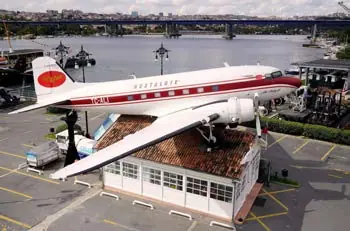
Indoor halls and outdoor exhibits sit side by side. Large vessels are displayed on the waterfront side, and smaller, more delicate pieces indoors. It can be visited on a rainy day too, but to explore the outdoor area comfortably, it is a good idea to bring a top suited to the weather.
What will you see in the collection?
It is impossible to list the whole collection item by item; the headings below sum up the areas where visitors spend the most time:
- Road transport: Cars, motorcycles, bicycles and horse-drawn carriages from different periods. Children can see side by side how a vehicle has changed over the years.
- Rail: Locomotives, carriages and trams. The large-scale exhibits bring the textbook topic of the "industrial revolution" to life.
- Aviation: Aircraft and aircraft engines. The examples with engines displayed in cross-section are well suited to explaining mechanical systems.
- Maritime: Boats, rowing boats, ship engines and nautical instruments. The exhibition area on the waterfront is like an extension of this section.
- Science and communication: Measuring instruments, steam engine models, old telephones and communication devices.
Some sections have push-button models and interactive displays. Which of these are working on a given day depends on the museum's own arrangements, so it is a good habit not to make promises to children in advance.
How should you plan your visit?
Because the collection is so large, a "we'll see everything" approach usually ends in exhaustion. This order works well for most groups:
- Choose a theme. For example, the development of transport, energy and machines, or seafaring. Passing this theme on to the guide keeps the commentary focused.
- Big pieces first. Large exhibits such as the locomotive, aircraft and boats keep curiosity alive in the first half hour.
- Then the details. Leave scientific instruments and small models for the second part, when attention spans are longer.
- Set a meeting point. Announce the group's meeting place and time at the entrance; this helps a great deal, especially with large classes.
On our Rahmi M. Koç Museum and Miniatürk tour, the museum visit is guided and about two hours are set aside for it in the programme. That is a comfortable frame for a theme-focused visit like the one described above.
Curriculum links for students
The museum pairs especially well with science, technology and social studies lessons. A few examples:
- Force and motion: Wheels, gears and engine systems.
- Energy transformations: The change from the steam engine to the internal combustion engine.
- Science, technology and society: How means of transport and communication changed everyday life.
- History: The industrial buildings on the shore of the Golden Horn and the culture of production from the Ottoman era to the Republic.
Preparing an "observation sheet" with three to five questions in class before the trip keeps students active as they walk around. Even simple tasks such as "Find the oldest vehicle and write down what it ran on" are enough.
Which tour can you combine it with?
The museum fills half a day on its own, but combined with other stops along the Golden Horn it makes for a much more balanced day. There are two ready-made programmes on our site:
- Rahmi Koç Museum and Miniatürk Tour: The museum in the morning, Miniatürk at midday. A day of about seven hours that primary school groups can also join comfortably.
- Rahmi Koç Museum, Panorama 1453 and Turkic World Culture Houses Tour: The culture houses, the conquest panorama, the museum and, in the afternoon, a boat trip to the Maiden's Tower. A fuller programme for middle and high school groups.
If you are wondering which of these two programmes suits your class, our day plan combining Miniatürk and the museum and our article on Panorama 1453 and the Turkic World Culture Houses will help you decide.
Small reminders before you go
- There is a lot of walking inside the museum, so comfortable shoes are a must.
- Photography rules may vary by section; listen to the guide's instructions.
- You can step inside some vehicles, while others must not be touched. Explain this distinction to children at the entrance.
- You can take a meal break at the museum café or nearby; if you would like a group meal, we will plan it together at the quote stage.
Frequently asked questions
How long does it take to visit the Rahmi M. Koç Museum?
It depends on the visitor's interests. On a guided group visit, around two hours is a good amount of time to see selected sections comfortably. Those who want to explore every section in detail can spend more than half a day.
Is the museum suitable for young children?
Yes. Large vehicles, trains and aircraft also capture the interest of young children. On our tour, the museum is followed by Miniatürk, which you explore on foot in the open air, so it makes a balanced day for primary school groups too.
Do you need a guide to visit the Rahmi Koç Museum?
It is not compulsory, but for school groups a guide's commentary makes a big difference. On our tours, the museum visit is guided.
Which tours include a museum visit?
It is included in the Rahmi Koç Museum and Miniatürk Tour and in the Rahmi Koç Museum, Panorama 1453 and Turkic World Culture Houses Tour. You can see other options on the Istanbul City Tours page.