Türkiye · Edirne
Selimiye Mosque and Mimar Sinan: Discover Edirne's Masterpiece
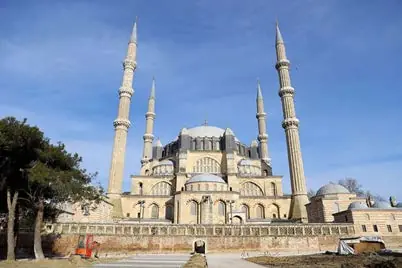
Selimiye Mosque is the building Mimar Sinan described among his own works as "my masterpiece", and it is considered the peak of Ottoman classical architecture. Built in Edirne in the name of Sultan Selim II, it is a work Sinan completed in his old age. The single great dome that greets you inside, and the eight-pier system that carries it, tell you at first glance why the building is so highly praised.
Sinan's three stages
When assessing his own works, Mimar Sinan is said to have singled out three mosques:
- Şehzade Mosque (Istanbul): "My apprentice work."
- Süleymaniye Mosque (Istanbul): "My journeyman work."
- Selimiye Mosque (Edirne): "My masterpiece."
This sequence reads like the story of Sinan's search for the dome and space. At Şehzade, a central plan supported by four half-domes; at Süleymaniye, a scale that rivals Hagia Sophia; and finally at Selimiye, an interior with almost no obstructions, united beneath a single dome. For anyone who has seen the Süleymaniye in Istanbul, visiting the Selimiye is like reaching the final stop of this journey.
The dome and the interior
When you enter the Selimiye, the first thing you notice is that the space is perceived as a whole. The great dome rests on eight strong piers, and these piers have been set as close to the walls as possible. So wherever you stand inside the mosque, you can see the whole dome.
Details to look out for:
- The muezzin's platform: Placed directly beneath the dome on marble columns, the platform emphasises the centre of the interior. The small fountain beneath it is also an interesting detail.
- The mihrab and minbar: With their marble craftsmanship and carving, they are among the finest examples of Ottoman stone art.
- Tile decoration: The İznik tiles around the mihrab and in the sultan's loge reflect the most brilliant period of 16th-century tile art.
- Light: Numerous windows keep the interior bright throughout the day. Watching how differently the light falls in the morning and the afternoon is an experience in itself.
The minarets
The Selimiye's four minarets rise at the four corners of the dome. They are known for being slender and very tall, and they are part of the skyline visible from miles away as you approach Edirne. Each minaret has three balconies, and the staircase arrangements inside the minarets are among the details often cited as a feat of mastery.
The complex
The Selimiye is not just a mosque but a complex (külliye). Around its courtyard are educational buildings such as a madrasa and a school of hadith. Some of these buildings are used as museums today. The Arasta, the market lined with shops that runs down from beside the mosque, was designed as the income-generating part of the complex and is still a lively shopping area today.
A few notes on Sinan
Mimar Sinan served as chief architect for many years during the Ottoman Empire's most brilliant period and left a large number of works, from mosques to bridges, hamams to madrasas, caravanserais to fountains. He is said to have trained in the Janissary corps and developed his engineering skills by building bridges and ships on campaigns. This experience underpins his bold solutions in domes and load-bearing systems.
Thinking about Sinan's works in Istanbul as you tour the Selimiye enriches the visit. If you are coming with student groups, putting photos of the Süleymaniye and the Selimiye side by side and discussing the differences makes a short but effective preparation in class.
UNESCO World Heritage
Selimiye Mosque and its Complex are on the UNESCO World Heritage List. This shows that the building is considered important not only for Türkiye but for the history of world architecture.
When you visit
The Selimiye is a working mosque. During your visit:
- Women should wear a headscarf, and everyone should wear clothes covering the knees and shoulders.
- Shoes are removed at the entrance.
- Visits may be restricted during prayer times, especially during Friday prayers. For group visits, we plan the timing around these times.
- Keep quiet inside and do not walk in front of people who are praying.
Photography is usually allowed, but avoid using flash and disturbing worshippers. For the most impressive shots from outside, try to capture the dome and the four minarets together from the park and square around the mosque.
The two mosques next to the Selimiye
The Old Mosque and the Üç Şerefeli Mosque, within walking distance of the Selimiye, let you see the development of Ottoman mosque architecture when visited on the same day. The Old Mosque represents the early multi-domed plan, and the Üç Şerefeli a step towards a wider central space. The Selimiye is where this line arrives.
Seeing the Selimiye on a tour
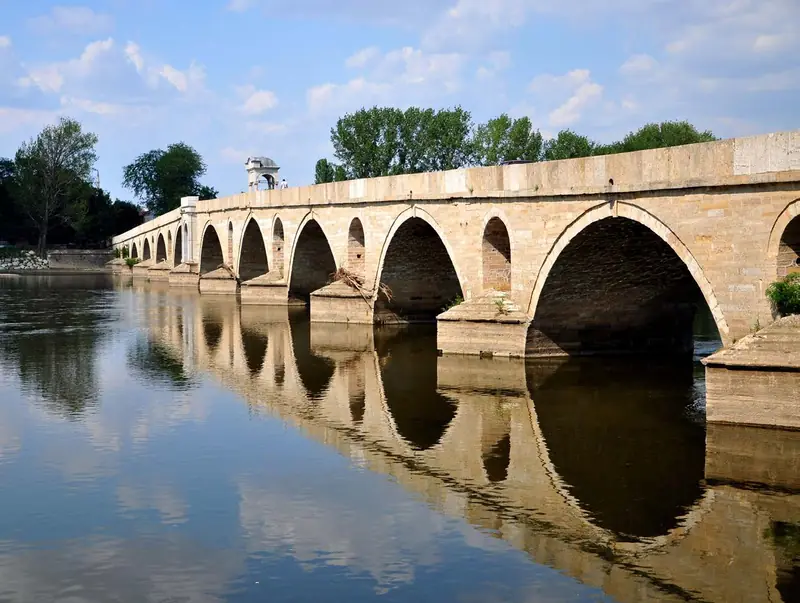
On the Edirne Tour programme, Selimiye Mosque, the Old Mosque and the Üç Şerefeli Mosque are visited one after another after lunch. In the morning you visit the Complex of Bayezid II, the ruins of Edirne Palace and the Kırkpınar wrestling arena, and the day is rounded off in the late afternoon with the bridges and Karaağaç. It is a rich field trip for school groups interested in Ottoman architecture and Balkan history; for planning a school trip, see our school trips page too.
For other stops in Edirne, read our article Things to see in Edirne in one day.
Frequently asked questions
Who built Selimiye Mosque?
Selimiye Mosque was built by Mimar Sinan, the Ottoman chief architect, in the name of Sultan Selim II. Sinan described this building as his own "masterpiece".
Why is Selimiye Mosque important?
With its design in which a single great dome is carried on eight piers and the interior is perceived as an unobstructed whole, it is considered the peak of Ottoman classical architecture. It is on the UNESCO World Heritage List.
How long does it take to visit Selimiye Mosque?
Touring the mosque and its surroundings at a relaxed pace takes about an hour. If you also want to see the Arasta and the museums in the complex, you need to allow more time.
Is there a dress code for visiting Selimiye Mosque?
Yes. Women are expected to wear a headscarf, and everyone to wear clothes covering the knees and shoulders. Shoes are removed at the entrance.