Istanbul trips · Istanbul
Tracing Three Faiths in Istanbul: Synagogue, Patriarchate and Süleymaniye
In Istanbul you can see the places of worship of three great faiths in a single day: the Ashkenazi Synagogue in Galata, the Greek Orthodox Patriarchate in Fener on the shore of the Golden Horn, and the Süleymaniye Mosque at the top of the historic peninsula. These three stops show, in concrete form, the city's centuries-old identity as a home to different communities side by side. Before your visit, knowing each building's own rules and choosing simple, modest clothing is all the preparation you need.
Why these three buildings?
From Byzantium through the Ottoman era to the Republic, Istanbul has been a city where communities of different faiths lived side by side. Traces of this coexistence can still be seen in the streets of Galata, on the shores of the Golden Horn and on the hills of the historic peninsula. The 3 Faiths, 3 Symbols approach sets out to read this rich heritage through three representative buildings: each is a door opening onto the history of its own community.
First stop: Ashkenazi Synagogue
Location and history
Located near Galata Tower, around Yüksek Kaldırım, the Ashkenazi Synagogue was built in 1900 according to our catalogue information and is one of the Ashkenazi synagogues in Istanbul still open for worship. Ashkenazi Jews are the community whose roots lie in Central and Eastern Europe. Most of Istanbul's Jewish community, however, are Sephardic Jews who arrived from Spain at the end of the 15th century; the Ashkenazi synagogue therefore shows a lesser-known side of the city's many-layered Jewish history.
During your visit
Security checks are carried out at synagogue visits and you may be asked for ID. Men may be expected to cover their heads; staff will explain the practice during the visit. Keep quiet inside and ask permission before taking photographs.
Second stop: Ecumenical Patriarchate in Fener
Location and history
Located in the Fener district on the historic peninsula side of the Golden Horn, the Greek Orthodox Patriarchate is an important centre for the Orthodox Christian world. The Church of St George within the Patriarchate complex is the main part visitors see. Inside the church, the carved wooden iconostasis, the screen on which the icons are displayed, stands out with its gold gilding.
The Fener district itself is well worth seeing: colourful old houses, steep slopes and views of the Golden Horn make it one of Istanbul's most characterful neighbourhoods.
During your visit
The church is an active place of worship. During services, visitors are expected to stay quiet and still. Simple clothing that covers the shoulders and knees is appropriate.
Third stop: Süleymaniye Mosque and Complex
Location and history
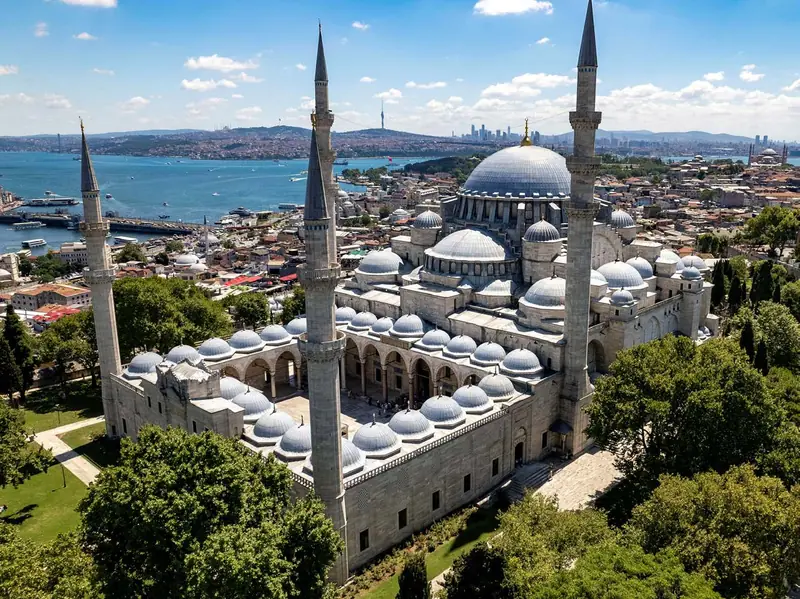
Rising on the hill overlooking the Golden Horn, Süleymaniye is the mosque and complex that Mimar Sinan built for Sultan Suleiman the Magnificent between 1551 and 1557. Described by Sinan as his "journeyman work", it is one of the most magnificent examples of classical Ottoman architecture in Istanbul. The complex consists of the mosque, madrasas, a hospital (darüşşifa), a soup kitchen (imaret), a hammam and tombs. The tomb of Suleiman the Magnificent is in the cemetery behind the mosque, and Mimar Sinan's tomb is just next to the complex.
The view from the mosque's courtyard and back garden, stretching over the Golden Horn, Galata and the entrance to the Bosphorus, is one of the unforgettable moments of the visit. Seeing Galata, your first stop of the morning, from across the water brings the day full circle.
During your visit
Women are expected to wear a headscarf, and everyone is expected to wear clothing covering the knees and shoulders. Shoes are removed at the entrance. Visits are restricted during prayer times.
Lunch in Süleymaniye: kuru fasulye
The area around Süleymaniye is famous for its kuru fasulye (white bean stew) with rice. The local restaurants that have served this dish for years on the street opposite the madrasas have become part of the area's culinary identity.
In the 3 Faiths, 3 Symbols Tour programme, lunch is also taken here: the programme includes a menu in Süleymaniye of kuru fasulye, rice, salad, pickles and soft drinks.
How the tour runs
The full-day programme starts with departure at 08:00 in the morning. First comes the Ashkenazi Synagogue near Galata Tower, followed by the Greek Orthodox Patriarchate in Fener. The day ends with the Süleymaniye Mosque and Complex and a kuru fasulye lunch.
Visiting hours at places of worship and closures on special days may change. Once the date is confirmed, the programme is checked against these hours.
Who is it for?
In our catalogue, this tour stands out for school, cultural and corporate groups. For high school groups, it is a trip that can be linked to values education, history and religious culture lessons. The visiting rules at the places of worship are explained to students in advance. For school trip planning, take a look at our school trips page. If you would like to see another side of the historic peninsula, read our article on places to see in Sultanahmet in one day.
Respect during your visit
What the three buildings have in common is that they are all living places where worship continues today. Visitors should therefore keep in mind that they are touring a community's place of worship, not a museum. Speaking quietly, not photographing people at prayer and following staff instructions are the basic rules at all three.
A shared clothing list
As you will visit all three places of worship on the same day, a single choice of clothing can suit them all:
- A top that covers the shoulders and trousers or a long skirt that covers the knees
- A shawl or headscarf in your bag for women
- Shoes that are easy to take off and put on
- ID document (for security checks)
Frequently asked questions
Which places does the 3 Faiths, 3 Symbols tour visit?
The tour visits the Ashkenazi Synagogue near Galata Tower, the Greek Orthodox Patriarchate in Fener, and the Süleymaniye Mosque and Complex. Lunch is a kuru fasulye menu in Süleymaniye.
Is there a dress code in places of worship?
Modest, simple clothing is recommended. Visiting rules and security checks may vary by building, so they are shared with the group before the tour.
Can visiting hours change?
Visiting hours at places of worship and closures on special days may change. Once the date is confirmed, the programme is checked against these hours.
Is this tour suitable for schools?
Yes. For high school groups, it is a trip that can be linked to history, religious culture and values education lessons. The visiting rules are explained to students in advance.