Türkiye · Çeşme
What to Eat in Çeşme and Alaçatı: A Food Guide from Kumru to Mastic Coffee
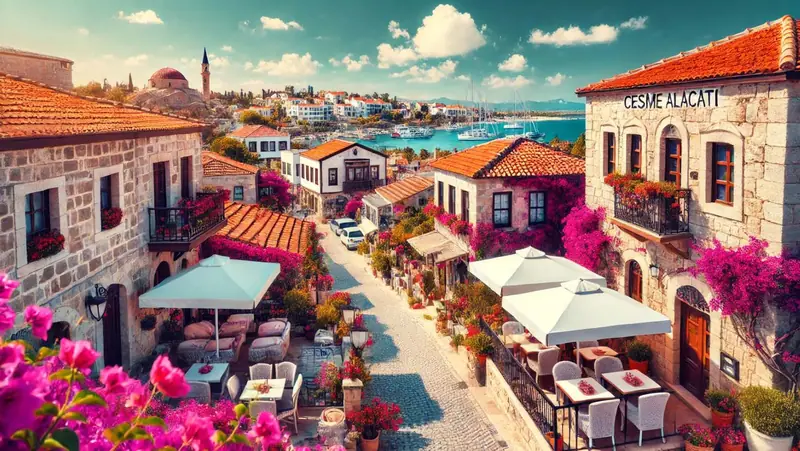
These are the things you should not leave Çeşme and Alaçatı without tasting: the Çeşme kumru with its sesame bread, sucuk and kaşar cheese, Turkish coffee brewed with mastic, mastic ice cream and milk pudding, Aegean wild greens in olive oil, and fresh seafood. The peninsula's cuisine puts olive oil and seasonal greens at its heart; it is simple but very aromatic. For coffee and desserts, Alaçatı's streets are a good start; for kumru, Çeşme and the Ilıca area; and for fish, the restaurants along the shore.
What shaped the peninsula's cuisine
The Çeşme peninsula has a cuisine fed by the herbs that grow in its windy climate, its vineyards, olive groves and the sea. Greek and Turkish culinary traditions intertwined here over centuries, and recipes brought by migrants who came with the population exchange were added to this heritage. Its position opposite the island of Chios also helped mastic take a prominent place in the region's desserts and drinks.
Things you must try
Çeşme kumru
A Çeşme version of İzmir's kumru sandwich, with more fillings. The special sesame-coated kumru bread is split in two and filled with sucuk, salami, kaşar cheese, tomato and pepper, then heated in a toastie maker or on a grill. It is served with ayran. As a quick but filling meal, it makes a good break while you are out exploring.
Turkish coffee with mastic
An essential of Alaçatı's streets. A little mastic is added to Turkish coffee as it brews, giving a coffee with a lightly resinous, fresh aroma. Many coffee shops also serve mastic Turkish delight or a small sweet with the coffee.
Mastic ice cream and milk pudding
Mastic gives traditional Aegean ice cream both aroma and stretch. Mastic milk pudding, meanwhile, is a simple, light and refreshing dessert and a favourite on summer evenings. Some dessert shops serve these with jams typical of the Aegean.
Aegean greens
Greens such as şevketibostan (golden thistle), radish leaves, radika (wild chicory), arapsaçı (wild fennel), samphire, sorrel and mallow are cooked in olive oil on the peninsula's tables, boiled and served with lemon, or used in börek and gözleme. Spring is the season for wild greens; the Herb Festival held in Alaçatı celebrates this culture.
Seafood
Depending on the season, restaurants on the shore often have fish, squid, octopus, mussels and prawns. When choosing fish, the best approach is to ask which species came in fresh that day. Meze such as samphire, çiroz (dried mackerel) and fava are an essential part of a fish meal.
Breakfast
An Aegean breakfast consists of olives, village cheeses, an omelette with herbs, homemade jams, gözleme and freshly pressed olive oil. In Alaçatı, long breakfasts have become a weekend ritual.
Where to eat what
- The stone streets of Alaçatı: Mastic coffee, ice cream, milk pudding and long breakfasts.
- Central Çeşme and the Ilıca area: Kumru kiosks and quick meals.
- Restaurants on the shore: Fish, seafood and meze.
- Village markets: Fresh greens, olives, olive oil, cheese and seasonal fruit.
What to take home
- Mastic: For homemade desserts and coffee.
- Mastic jam and Turkish delight: Popular as gifts.
- Olive oil and olives: Products of the peninsula and the surrounding area.
- Dried herbs: Such as thyme and sage.
- Olive oil soaps: A light gift that is easy to carry.
If you are flying home, check the rules for carrying liquids in advance.
Planning your meals on the trip
If you are visiting Alaçatı and Çeşme on a day trip, planning the morning around a coffee and dessert in Alaçatı, lunch around a kumru and the evening around a fish dinner by the shore lets you get to know the peninsula's cuisine in a single day. You can find the town's sights in our article Things to see in Alaçatı.
Food stops on the tour programme
On TatiliYakala's Ephesus, Kuşadası, Çeşme, Alaçatı and Pamukkale tour, two signature tastes of the peninsula are part of the programme: on the third day there is a stop for Turkish coffee with mastic in Alaçatı, and lunch is Çeşme kumru with ayran. On the second day of the same tour there is also a village-style spread breakfast in Şirince, so you get to experience the Aegean breakfast culture first-hand too.
A short note on mastic
Mastic is a resin that seeps from the trunk of the mastic tree and takes the shape of a drop as it dries. The product of these trees, which grow in the Aegean, especially on the Çeşme peninsula and the island of Chios opposite, has been used for centuries to flavour desserts, drinks and even some dishes. Because even a small amount gives a strong scent, recipes use it in very small quantities. If you want to try it at home, pounding the mastic with a little sugar in a mortar makes it easier to turn into powder. When buying, choosing light-coloured, shiny pieces with a clear scent is a good sign.
Frequently asked questions
What is a Çeşme kumru?
It is a sandwich made by filling sesame kumru bread with sucuk, salami, kaşar cheese, tomato and pepper, then heating it. In Çeşme it is usually eaten with ayran.
What does Turkish coffee with mastic taste like?
Mastic gives the coffee a lightly resinous, fresh aroma. It leaves a pleasant scent in the mouth without overpowering the coffee's own taste.
When is the Alaçatı Herb Festival held?
The festival is usually held in spring, during the wild greens season. As dates can change from year to year, check the latest announcements before you go.
What to buy in Çeşme?
Mastic, mastic jam and Turkish delight, olive oil, olives, dried herbs and olive oil soaps are the most popular things to buy in Çeşme and Alaçatı.
Are there vegetarian options in Çeşme?
Yes, plenty. Olive oil dishes made with Aegean greens, stuffed courgette flowers, artichokes, fava, gözleme and village breakfasts offer a rich table on the peninsula for those who don't eat meat. You can also ask for your kumru without sucuk, with cheese and vegetables.