Türkiye · Ephesus
Ephesus Ancient City Travel Guide: A Route from Celsus to the Great Theatre
The ancient city of Ephesus, near Selçuk in İzmir province, holds the remains of one of the most magnificent Roman cities in Anatolia and is on the UNESCO World Heritage List. The must-sees are the Library of Celsus, Curetes Street, the Great Theatre, the Odeon and the Temple of Hadrian; the Terrace Houses, where the city's wealthy families lived, are an experience in their own right. The most comfortable way to see the site is from top to bottom, walking from the upper entrance towards the harbour.
Why is Ephesus so important?
In antiquity, Ephesus was one of the largest port cities of the Aegean. In the Roman period it became one of the key centres of the province of Asia and influenced a wide region in trade, religion and culture. The Temple of Artemis near the city was counted among the Seven Wonders of the Ancient World. Over time, the silting up of the harbour and the retreat of the coastline played an important part in the city's decline.
Most of the streets, temples and buildings you see today date from the Roman imperial period. Excavations have been going on for many years, and new finds can come to light every season.
A top-to-bottom route through the site
The State Agora and the Odeon
The first thing you meet when you enter from the upper gate is the city's administrative centre. The Odeon is a small semicircular theatre used for council meetings and small performances. Right nearby are the remains of the Temple of Domitian.
Curetes Street
Paved in marble and lined on both sides with statue bases and monuments, this street is one of the most photogenic parts of Ephesus. As you walk downhill, you come across the Gate of Hercules, the Fountain of Trajan and the elegant façade of the Temple of Hadrian. The reliefs on the arch of the Temple of Hadrian are worth a close look.
The Terrace Houses
On the slope above Curetes Street are the houses of the city's wealthy families. In this area, covered by a protective roof, wall paintings and mosaics give a very vivid idea of daily life in Roman times. The area is managed separately from the main site; check the visiting conditions before you go.
Library of Celsus
The symbol of Ephesus. Built by his son in honour of the Roman senator Celsus, the library, with its two-storey façade and the statue copies in its niches, has one of the most impressive building façades of the ancient world. Copies of female statues representing wisdom, virtue, intelligence and knowledge stand on the façade. The light falls more beautifully on the façade in the early morning or late afternoon.
The Great Theatre and Harbour Street
Carved into the slope of Mount Panayır, the Great Theatre is one of the city's largest buildings, with room for tens of thousands of spectators. Looking down from the steps onto Harbour Street, which once led to the harbour, helps you understand the city's link with the sea.
Stops around Ephesus
A visit to Ephesus is not limited to a single site. In and around Selçuk there are several important stops close to each other:
- House of the Virgin Mary: On the slopes of Mount Bülbül, an important place of pilgrimage for the Christian world. The Virgin Mary is believed to have spent her final years here.
- Temple of Artemis: The site of one of the Seven Wonders. Today a single re-erected column stands.
- Basilica of St John: On Ayasuluk Hill, the remains of the basilica built where the tomb of St John is believed to lie.
- İsa Bey Mosque: One of the important buildings of the Beylik period, decorated with materials brought from the ancient city.
- Ephesus Museum: The museum in Selçuk displaying statues and artefacts from the excavations.
- Şirince: A mountain village a short drive from Selçuk. For details, see our Şirince travel guide.
Practical tips for your visit
- Go early: In summer the site gets very hot and there is little shade. The morning hours are both cooler and quieter.
- Wear comfortable shoes: The marble paving is slippery and the stony paths are uneven.
- Water and a hat: Be sure to bring water, a hat and sun cream.
- Guided commentary: Without commentary, Ephesus can look like a pile of stones. A guide or audio guide brings the story of the buildings to life.
- Up-to-date information: Opening hours and entry conditions may vary by season; check official sources.
Seeing Ephesus on a tour programme
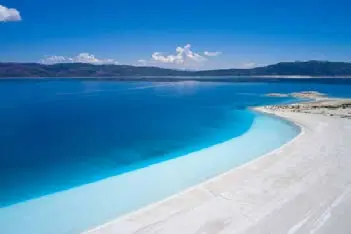
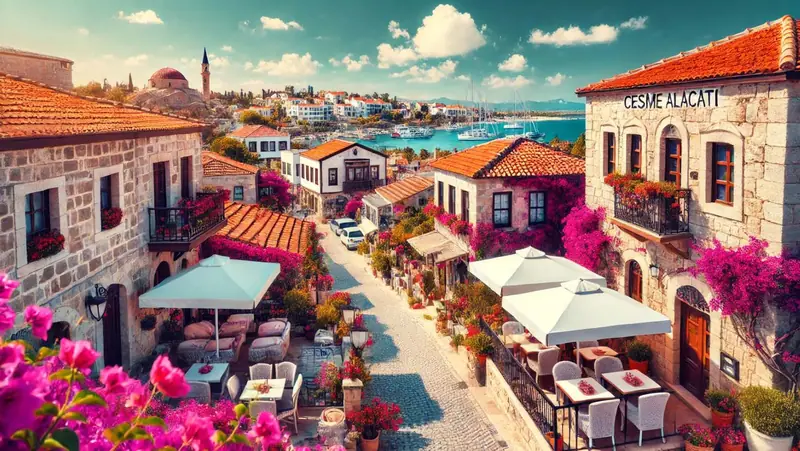
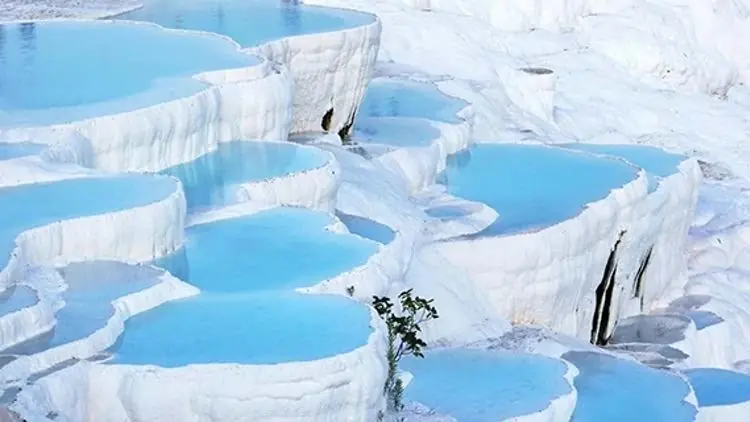
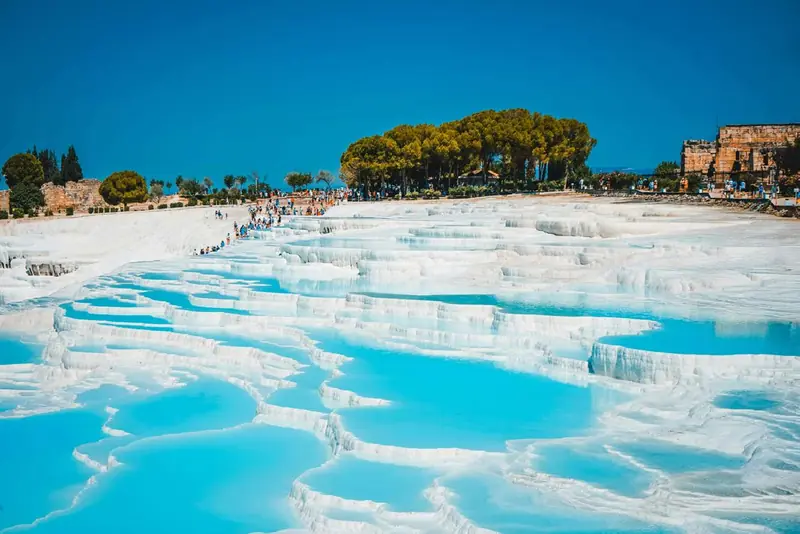
Both of TatiliYakala's Aegean programmes include Ephesus. On the 2 nights, 3 days Salda Lake, Pamukkale, Ephesus, Kuşadası and Şirince tour, the third day covers the House of the Virgin Mary; in the ancient city of Ephesus, the Odeon, the Temple of Domitian, Hadrian's Gate, the Fountain of Trajan, the Library of Celsus, the Great Theatre and Curetes Street; followed by the Temple of Artemis (panoramic view), İsa Bey Mosque and the Basilica of St John. On the 3 nights, 4 days Ephesus, Kuşadası, Çeşme, Alaçatı and Pamukkale tour, the second day covers the Agora, the Ancient Theatre, the Terrace Houses, the Odeon, the Gate of Hercules, the Fountain of Trajan and the Library of Celsus, before moving on to the Church of the Virgin Mary.
Explaining Ephesus to different age groups
If you are visiting Ephesus with children, framing the site as a journey through time keeps their interest alive. You could ask them to imagine they are walking down the street of an ancient city on Curetes Street, or that they are spectators watching a show in the Great Theatre. For adult groups, topics such as the city's economic and religious life, the effect of losing the harbour and how the excavations continue today deepen the conversation. Whatever the age, showing a photo of the Library of Celsus before the visit and saying "let's find this building" makes entering the site exciting.
Frequently asked questions
How many hours does it take to visit the ancient city of Ephesus?
You need to allow a few hours to see the main streets and highlights. If you add the Terrace Houses and the Ephesus Museum, plan for more than half a day.
In which season should you visit Ephesus?
Spring and autumn, with their mild weather, are ideal for Ephesus. If you are going in summer, choose the early morning hours.
Who built the Library of Celsus?
The library was built by his son in honour of the Roman senator Celsus. Celsus's tomb is known to be inside the building as well.
Is the Ephesus tour suitable for children?
Yes; especially with a guided commentary, it captures children's interest. Because of the heat and the long walk, water, a hat and comfortable shoes are important.