
 3 nights, 4 days
Ephesus, Kuşadası, Çeşme, Alaçatı and Pamukkale Tour
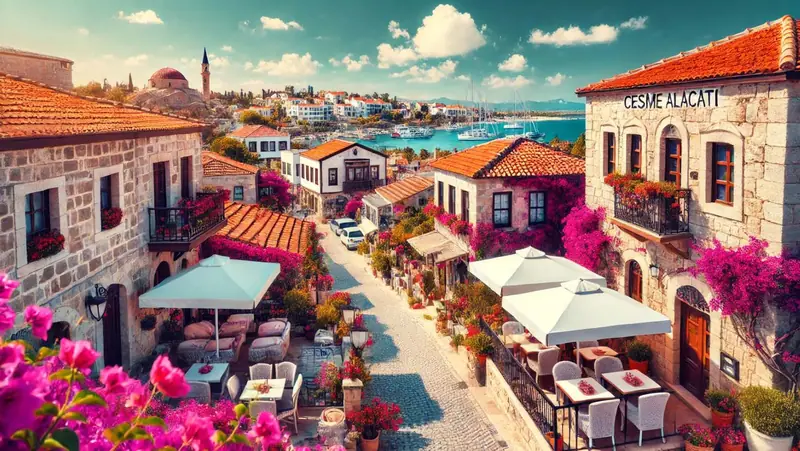
Şirince, the ancient city of Ephesus, the House of the Virgin Mary, Alaçatı
Turquoise Salda, white Pamukkale and ancient Ephesus: a route designed to show you three different faces of the Aegean in a short time.
The price is prepared according to your dates, group size and preferences.
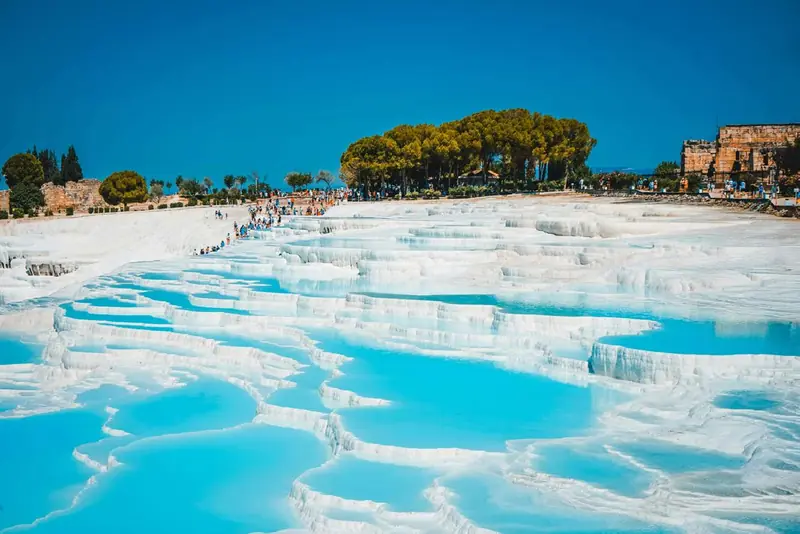
The second day begins with a guided talk at Salda Lake, known for its white beach and turquoise water. You then explore the Pamukkale travertines and, in the ancient city of Hierapolis, the theatre, baths, Temple of Apollo and Plutonion. In the evening you head to the hotel in Kuşadası.
On the third day you visit the House of the Virgin Mary on Mount Koressos (Bülbül Dağı), the Library of Celsus, the Great Theatre and Curetes Street in the ancient city of Ephesus, the Temple of Artemis, the İsa Bey Mosque and the Basilica of St John. The day ends with a walk in the village of Şirince.
Send us your dates and group size for Salda, Pamukkale, Ephesus, Şirince and we will tailor the programme to your group.
The daily route follows the programme in the catalogue. A detailed itinerary is shared with the quote.
Salda Lake, guided talk
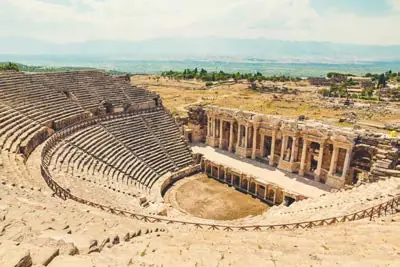
Pamukkale travertines and the ancient city of Hierapolis (theatre, baths, gymnasium, Temple of Apollo, Plutonion, necropolis)
Textile shopping stop
Check in at the hotel in Kuşadası; dinner and overnight stay
Breakfast; House of the Virgin Mary on Mount Koressos (Bülbül Dağı)
Ancient city of Ephesus: Odeon, Temple of Domitian, Gate of Hadrian, Fountain of Trajan, Library of Celsus, Great Theatre, Curetes Street
Lunch break
Temple of Artemis (from outside), İsa Bey Mosque, Basilica of St John
Tile workshop; walk in the village of Şirince
Return to Istanbul
In the Yeşilova district of Burdur, at about 196 m deep, it is one of the deepest lakes in Türkiye. It is known for the white hydromagnesite formations along its shores. In 2021 NASA described Salda's mineral and rock deposits as the closest analogue on Earth to Jezero Crater on Mars, where the Perseverance rover landed.
White travertine terraces formed by the deposits of calcium carbonate-rich thermal waters flowing down a slope about 200 m high. Together with the ancient city of Hierapolis, it was added to the UNESCO World Heritage List in 1988. Visitors walk barefoot on the terraces to protect the limestone surface.
A spa city founded at the end of the 2nd century BC by the Attalid kings of Pergamon. You can see baths, the remains of the Temple of Apollo, a theatre, a monumental gate, a nymphaeum, a large necropolis and the Martyrium of St Philip. Together with Pamukkale, it is a UNESCO World Heritage Site.
This small stone building on Mount Koressos (Bülbüldağı), about 7 km from Selçuk, is a place of pilgrimage believed to be where the Virgin Mary spent her final years. It was identified in 1881 and rediscovered by Lazarist priests in 1891. Popes Paul VI, John Paul II and Benedict XVI have visited it.
Founded by Ionian colonists in the 10th century BC, Ephesus became the capital of the province of Asia in the Roman period. The remains at Selçuk include the Great Theatre, which held about 25,000 people, the Library of Celsus and the Terrace Houses. It was added to the UNESCO World Heritage List in 2015.
Built in the 110s by his son in memory of Tiberius Julius Celsus Polemaeanus, governor of the province of Asia, it was completed in the reign of Emperor Hadrian. Celsus's tomb lies beneath the building, and the library is thought to have held about 12,000 scrolls. The façade you see today was re-erected between 1970 and 1978.
The Artemision near Selçuk is counted among the Seven Wonders of the Ancient World. The temple burned down in 356 BC and was rebuilt; its final form was destroyed in 401. Today only the foundations remain on the site, along with a single column re-erected from fragments found there.
A mountain village near Selçuk, cited as an example of Ottoman-era Christian settlement architecture, with most of its houses dating from the 19th century. Formerly called Çirkince, the village was renamed Şirince in 1926. Wine, olive oil and peaches are among its local products.
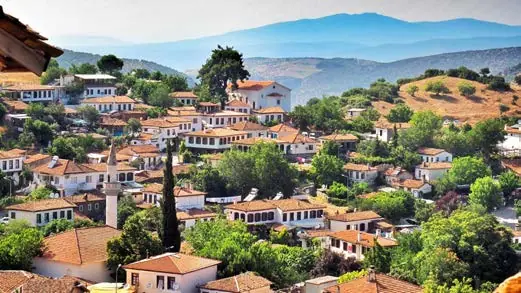
The Aegean coast has a Mediterranean climate, with hot, dry summers and mild, rainy winters. Spring and autumn are better for walking around the open-air ancient cities and the travertines; inland, around Salda and Pamukkale, winters are cold.
An intensive but rewarding field programme for ancient history and geography; recommended for high school groups.
Walking on the travertines follows the rules of the site management; usually you take off your shoes and walk on the designated paths. The current rules are shared before the tour.
The Aegean coast has a Mediterranean climate, with hot, dry summers and mild, rainy winters. Spring and autumn are better for walking around the open-air ancient cities and the travertines; inland, around Salda and Pamukkale, winters are cold.
What is covered for transport, guiding, admission fees and meals is stated in writing in the quote, according to your dates, group size and preferences. Services marked as extras in the catalogue are charged separately.
The departure point is planned according to the group's location. Whether pick-up from your school, workplace or another point you choose is possible is confirmed at the quote stage.
You can fill in the form on this page, message us on WhatsApp or call 0212 232 09 80. Sharing your dates, group size and, if applicable, your school or organisation details will speed up the quote.
The programme can be planned for anything from individual participants to large school and corporate groups. As the number of people determines vehicle and guide planning, simply state it in your quote request.
Get a quote
Tell us your dates, group size and, if applicable, your school or organisation details, and we will prepare the programme and price for your group and get back to you.
Travel agency with licence number A-12881, since 2012
Tours in Türkiye
3 nights, 4 daysŞirince, the ancient city of Ephesus, the House of the Virgin Mary, Alaçatı
 Day trip or 2 days
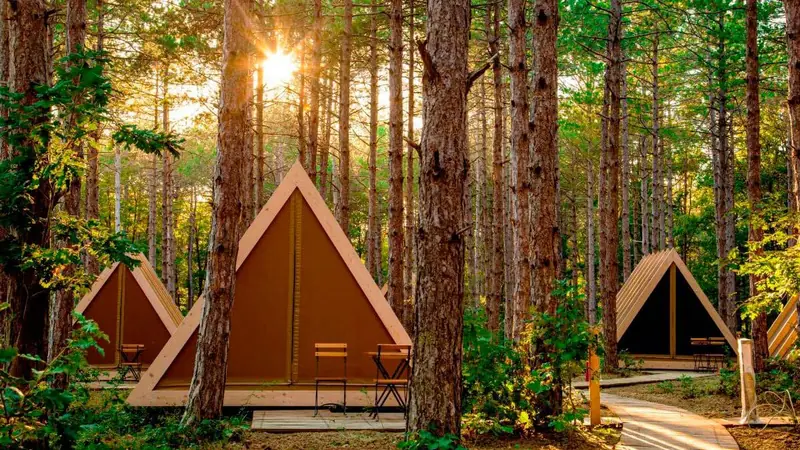
İğneada Floodplain Forests, Lake Mert, İğneada Lighthouse, Silivri
 1 night, 2 days
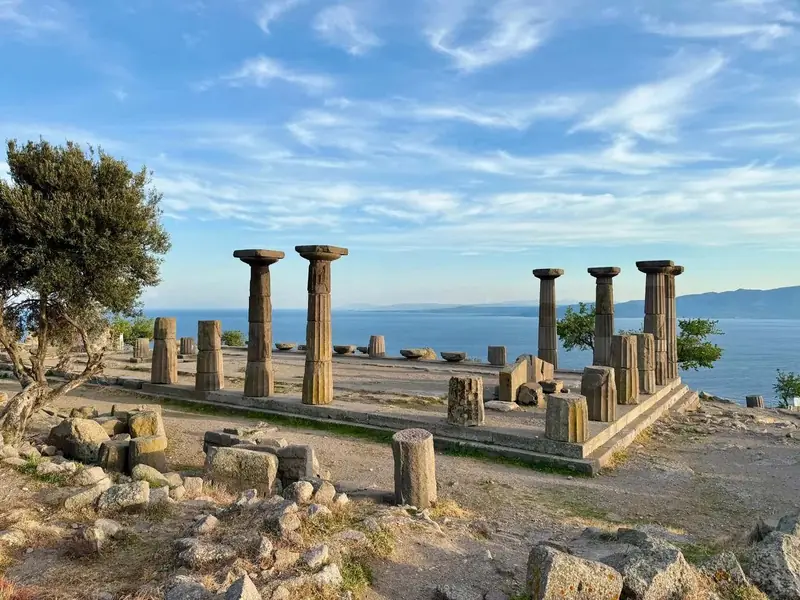
The Acropolis of Assos, the Temple of Athena, the ancient city of Troy, Çimenlik Castle