Türkiye · Troy
Guide to the Ancient City of Troy: Legend, Excavations and the Wooden Horse
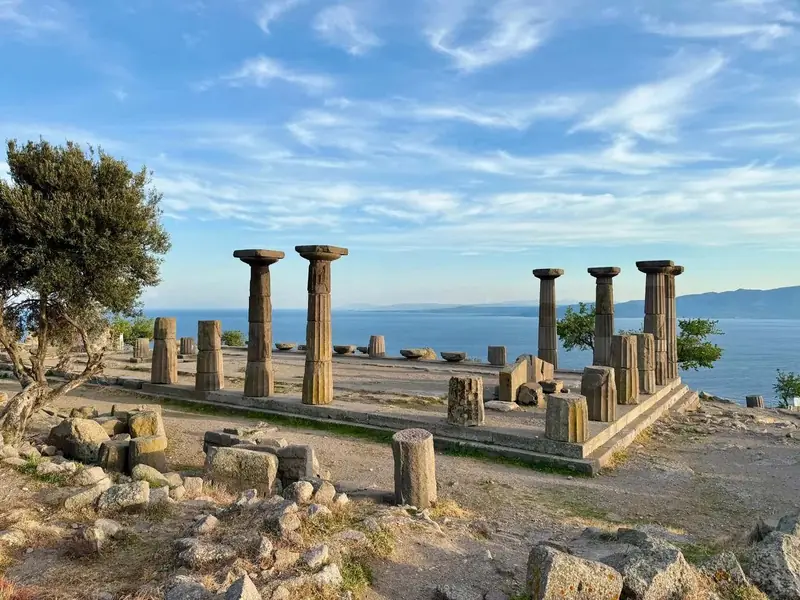
Troy is known as the city where the war described in Homer's Iliad took place, and it lies south of Çanakkale on the hill of Hisarlık. What surprises visitors is that they see not a single city here but many layers of settlement built one on top of the other over thousands of years. Knowing a little about this layered structure and the legend before your visit turns piles of stones into a meaningful story.
Why is Troy important?
Troy is a symbol of both a legend and the history of archaeology. The story of the Trojan War, told since antiquity, is at the heart of the Iliad and the Odyssey, foundational texts of Western literature. Because of its long history of settlement, stretching from the Bronze Age to the Roman period, the city is on the UNESCO World Heritage List.
Archaeologists identify nine main layers of settlement built one above the other on the hill of Hisarlık and usually number them from Troy I to Troy IX. So, right next to a wall on the site, you may see the remains of a building much older or much newer than it.
A quick reminder of the legend
According to the story, the Trojan prince Paris carries off Helen, wife of the king of Sparta, and the Achaeans wage war on Troy. The siege lasts for years. Finally the Achaeans build a great wooden horse, hide their warriors inside it and pretend to withdraw. The Trojans bring the horse into the city; at night the soldiers inside come out, open the gates and the city falls.
The expression 'Trojan horse' comes from this story and is used today for anything that looks harmless from the outside but hides a danger within. If you are on a trip with students, this expression is a good way to connect the legend to the present day.
The story of the excavations
Where Troy actually stood was debated for a long time. In the 19th century, the German businessman Heinrich Schliemann excavated the hill of Hisarlık and presented it as Homer's Troy. Schliemann's hasty excavation methods are criticised today because they damaged some layers; as you walk around the site you can see the great trench he dug.
The removal abroad of the artefacts Schliemann found and called 'Priam's Treasure' is also a well-known part of Troy's story. In later periods, excavations were continued by different teams with far more careful methods.
What to look for on site
A guide's commentary makes a big difference at Troy, because it is hard to tell which period the stones belong to just by looking. Still, the main things to watch out for are:
- City walls: Defensive walls from different periods show how the city grew over time. The sloping stone walls are among the most impressive parts of the site.
- The ramp: The stone-paved ramp leading up to the early city is one of the structures Schliemann presented with great excitement.
- Megaron buildings: The foundations of long, rectangular buildings from the Early Bronze Age.
- Schliemann's trench: The great excavation trench cutting through the hill shows the layers almost like a slice of cake.
- Roman remains: The remains of a theatre-like structure and a sanctuary show that the city kept its importance centuries after the legend.
- The view: Looking out from the hill, the plain that today seems far from the coast is said to have been much closer to the sea in antiquity. This helps you understand the city's strategic location.
The Wooden Horse
The big wooden horse at the entrance to the archaeological site is visitors' favourite photo spot. This horse is not an ancient artefact but a modern monument built to bring the legend to life. There is another wooden horse, made for a film, on the seafront in Çanakkale city centre; you can see it too when you explore the city centre.
How to get to Troy
Troy is south of Çanakkale city centre and can be reached quickly by road. For those coming from Istanbul, it makes more sense to combine Troy with Assos and the Gallipoli Peninsula than to plan it as a day trip on its own.
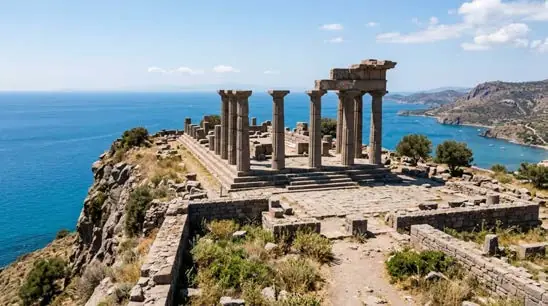
The Çanakkale, Troy and Assos Tour does exactly that. On the first day of the 1-night, 2-day programme, you visit the Assos Acropolis and the Temple of Athena in the morning, and after lunch the ancient city of Troy and the Wooden Horse. In the afternoon you go on to the Archaeological Museum, Çimenlik Castle, the Naval Museum, the minelayer Nusret and the Aynalı Çarşı (Mirrored Bazaar) in Çanakkale. You spend the night at a hotel, and the second day is devoted to the Gallipoli Peninsula.
If you are curious about the Assos leg of the programme, take a look at our Assos travel guide.
After your visit to Troy, seeing the Archaeological Museum in Çanakkale city centre is a good opportunity to complete the remains you saw on site with the finds.
Visiting tips
- Shade at the site is very limited. A hat and water are useful in summer, and a windbreaker in spring and autumn.
- You will be walking on earth and stone paths, so wear comfortable, non-slip shoes.
- Don't climb on the ruins or the stones; the site is protected.
- With student groups, briefly telling the legend before the visit and discussing the question 'Could there really have been a war here?' starts the visit with a sense of curiosity.
Frequently asked questions
Where is the ancient city of Troy?
Troy is in Çanakkale province, on the hill of Hisarlık south of the city centre. It is close to the Aegean and the entrance to the Dardanelles.
Is the wooden horse at Troy real?
No. The wooden horse at the site is a modern monument built to bring the legend to life. The horse described in ancient sources has not survived as an artefact.
How long does it take to visit Troy?
Touring the site with a guide's commentary usually takes a few hours. On our tour, Troy is placed on the same day as Assos and Çanakkale city centre.
Is Troy suitable for a school trip?
Yes. It links directly to ancient history, mythology and literature lessons. Students who have discussed the legend beforehand look at the layers and walls on site with much greater interest.