
International · Athens
Things to See in Athens: The City's Classics, from the Acropolis to Plaka
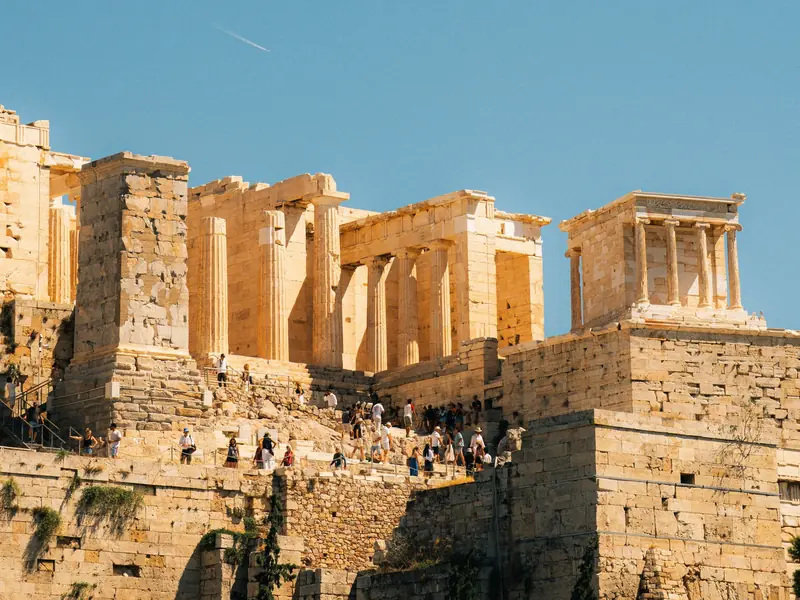
If you are visiting Athens for the first time, the Acropolis and the Acropolis Museum just below it should top your list; after that, the narrow streets of Plaka, the changing of the guard on Syntagma Square and the marble Panathenaic Stadium complete the classic city tour. All these stops are in the city centre and close to one another. Below, we briefly describe what to look out for at each.
The Acropolis: the rock above the city
The Acropolis is the ancient sanctuary on a rocky hill rising in the middle of Athens. Most of the buildings we see today were built in the 5th century BC, in the time of Pericles. The site is on the UNESCO World Heritage List.
What to look for
- Propylaea: The monumental gateway into the sanctuary. This is where you enter the Acropolis.
- Temple of Athena Nike: The small, elegant temple to the right of the entrance.
- Parthenon: The great temple dedicated to Athena, the city's protector goddess. Its Doric columns are the best-known image of ancient Greek architecture.
- Erechtheion: Famous for its porch, where statues of women (the Caryatids) support the roof instead of columns. The ones you see in place are copies; most of the originals are in the museum.
There is very little shade on the hill and the marble ground can be slippery. A hat, water and shoes with good grip make your visit much easier. Mornings are both cooler and quieter.
Acropolis Museum
The modern museum at the foot of the Acropolis displays original works brought down from the hill. At the entrance you can see the remains of the ancient city beneath the glass floor. The Parthenon gallery on the top floor shows the temple's friezes in their original arrangement; from here you can also see the Parthenon itself through the glass. The original Caryatids of the Erechtheion are also in this museum.
Visiting the museum straight after the Acropolis is ideal for taking a closer look at what you saw on the hill. This order works especially well for student groups.
Plaka and Anafiotika
Plaka, on the northern and eastern slopes of the Acropolis, is one of the oldest neighbourhoods in Athens. Neoclassical houses, bougainvillea-lined streets, tavernas and souvenir shops make it ideal for an evening stroll. Above Plaka, Anafiotika, squeezed onto the slope of the Acropolis, resembles an Aegean island village with its small whitewashed houses.
Syntagma Square and the changing of the guard
Syntagma (Constitution) Square is the large square in front of the Greek Parliament. At the Tomb of the Unknown Soldier in front of the Parliament building, Evzone soldiers in traditional dress regularly change the guard. Carried out with slow, ceremonial steps, the changing of the guard especially fascinates children.
The Panathenaic Stadium
Built entirely of marble, the Panathenaic Stadium was rebuilt on the site of an ancient stadium and hosted the first modern Olympic Games in 1896. It is a meaningful stop for young people and school groups interested in sports history.
Monastiraki and Ermou Street
Monastiraki Square and the market streets around it show the lively side of Athens. Nearby Ermou Street is one of the city's main shopping streets. The area is a natural meeting point for shopping and free time.
Outside the city: Sounion
Reached from Athens by the coastal road, the Temple of Poseidon at Cape Sounion overlooks the sea and is a favourite spot for watching the sunset. Lord Byron is said to have carved his name on one of the temple's columns.
How do these stops feature on the tour?
The Athens and Delphi Tour is a 3-night, 4-day programme with hotel accommodation. On the first day you fly from Istanbul to Athens in the morning, visit the Acropolis and the Acropolis Museum, and take an evening walk in Plaka. On the morning of the third day you see Syntagma Square, the changing of the guard in front of Parliament and the Panathenaic Stadium; in the afternoon you take the coastal road to Sounion and watch the sunset at the Temple of Poseidon. The fourth day has free time and shopping on Ermou Street and in Monastiraki. This tour is a new programme outside the catalogue.
The second day is devoted to ancient Delphi; for details see our guide to ancient Delphi, and to see all four days as one plan, see our 4-day Athens and Delphi itinerary.
Practical tips for sightseeing in Athens
Doing some brief reading about the ancient Greek gods and the age of Pericles before you visit makes what you see on the Acropolis far more meaningful. Especially if you are travelling with children, telling them beforehand the legend of Athena and Poseidon competing for the city makes the story of the Erechtheion intriguing.
The historic centre of Athens is small and walkable. The Acropolis, Plaka, Monastiraki and Syntagma are close together, so your feet will be your main means of transport in the city. Pavements and the marble ground at archaeological sites can be shiny and slippery, so shoes with good grip are essential. As the midday sun is very strong in summer, a good strategy is to move site visits to the morning and city walks to the evening. Carry your bag in front of you in crowded squares. Greece uses the euro and card payments are common; even so, having a little cash for small purchases makes things easier.
Frequently asked questions
What should you see on your first day in Athens?
It makes sense to visit the Acropolis together with the Acropolis Museum just below it on the first day. You can round off the evening with a walk through the streets of Plaka.
Is it worth visiting the Acropolis Museum?
Yes. Many original works from the hill, such as the Caryatids of the Erechtheion and the Parthenon friezes, are displayed in the museum. Visiting the museum after the Acropolis completes what you have seen.
When does the changing of the guard take place at Syntagma?
The changing of the guard takes place at regular intervals at the Tomb of the Unknown Soldier in front of Parliament. It is best to confirm the time on the day, on site or with your guide.
Is a trip to Athens suitable for children?
The Athens and Delphi Tour is considered suitable for school groups, families and culture lovers. As there is little shade on the Acropolis, it is important to bring a hat and water for children.