International · The Balkans
The Ottoman Heritage of the Balkans: Traces City by City, from Thessaloniki to Sarajevo
To see the Ottoman heritage of the Balkans, you can find a trace at every stop on the route: the house where Atatürk was born in Thessaloniki, the Banya Bashi Mosque in Sofia, the Dzhumaya (Cuma) Mosque in Plovdiv, Kalemegdan in Belgrade, Baščaršija in Sarajevo and the old bridge in Mostar are the best known. This article is a route notebook for those who want to read the cities on Balkan tours through this shared story. In each section we also note which tour each city is on.
Why are there so many Ottoman traces in the Balkans?
The Ottoman state ruled most of the Balkans for centuries. During this long period, cities gained mosques, bridges, hammams, caravanserais and bazaars. Today some of these buildings are open for worship, some are museums or cultural venues, and some survive only in name. Seeing these layers during the trip brings textbook history to life. Especially for student and institutional groups, combined with the guide's commentary, it becomes a powerful learning experience.
Greece: Kavala and Thessaloniki
Kavala is known as the birthplace of Muhammad Ali Pasha (Kavalalı Mehmet Ali Paşa), governor of Egypt. In the old quarter on the peninsula stand the house named after him and an imaret (soup kitchen) building; the great aqueduct at the entrance to the city is also one of Kavala's symbols.
Thessaloniki is the city where Mustafa Kemal Atatürk was born. The house where he was born is now a museum, and for Turkish visitors it is one of the most emotional stops on the route. The White Tower on the waterfront is also a well-known symbol of the city.
Both cities are on the Balkan Trio and the Grand Balkans routes.
Bulgaria: Sofia and Plovdiv
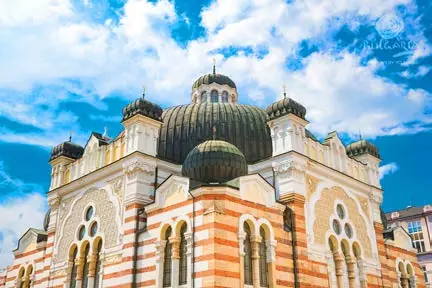
In Sofia, the Banya Bashi Mosque is an Ottoman mosque in the city centre that is still open for worship, named after the nearby thermal baths. Within the same few streets there are also a synagogue, Orthodox churches and the great Alexander Nevsky Cathedral; this picture of coexistence is one of Sofia's most fascinating aspects. Sofia is on both routes.
Plovdiv is known in Turkish as Filibe. The Dzhumaya (Cuma) Mosque in the city centre and the partly excavated Roman stadium right in front of it show two different eras in one spot. The colourful mansions and the ancient theatre in the old town are also worth seeing. Plovdiv is only on the Balkan Trio route.
Serbia: Belgrade
Overlooking the confluence of the Sava and Danube rivers, Belgrade's Kalemegdan Fortress is a frontier fortress that changed hands many times over the centuries. Inside the fortress are traces from the Ottoman period, one of which is the Tomb of Damat Ali Pasha. Watching the two rivers meet from the fortress walls is one of Belgrade's best-loved views. Belgrade is on the second day of the Grand Balkans route.
Bosnia and Herzegovina: Sarajevo, Mostar, Blagaj, Počitelj
Bosnia and Herzegovina is the section of the route richest in Ottoman heritage. Baščaršija, the Sebilj and the Gazi Husrev-beg Mosque in Sarajevo; the old bridge over the Neretva in Mostar; the tekke beside the Buna spring in Blagaj and the stone town of Počitelj follow one after another. We describe these stops in detail in our guide to Sarajevo and Mostar. This section is only on the Grand Balkans route.
Albania: Tirana and Elbasan
The Et'hem Bey Mosque in the centre of Tirana is known for the decoration on its inner and outer walls and stands right at the edge of the city's main square. In Elbasan you can see the old castle quarter, surrounded by walls that were also used in the Ottoman period. The Albanian stops are on the sixth day of the Grand Balkans.
North Macedonia: Skopje and Tetovo
In Skopje, the Stone Bridge, the Old Bazaar, the Kuršumli An, the Daut Pasha Hamam and the Mustafa Pasha Mosque, and in Tetovo the Painted (Alaca) Mosque with its colourful decoration, are vivid examples of Ottoman architecture in the Balkans. We also cover these cities in our guide to Skopje and Ohrid. Skopje is on both routes; Tetovo is only on the long route.
Getting more out of this route
- Do a little reading in advance: Reading a brief history of the cities you will visit makes it much easier to follow the guide's commentary.
- Be respectful in places of worship: When entering mosques, churches and synagogues, wear clothes that cover your shoulders and knees, and be mindful of prayer times.
- Keep a notes and photo journal: Especially in student groups, photographing one building in each city and taking short notes can turn into a presentation after the trip. For school groups, our article on planning a school trip abroad may be useful.
- See the shared heritage from many angles: In these cities, Ottoman traces are intertwined with those of Byzantium, Rome, Austria-Hungary and local cultures. Looking at them all together helps you understand the Balkans more accurately.
To decide which route suits you, our article on how many days a Balkan tour should be sets the two programmes side by side.
Getting more than the guide's commentary
On this route you spend limited time in each city. To make your guide's commentary stick, it helps to focus on a single building at each stop: the courtyard of the Gazi Husrev-beg Mosque in Sarajevo, the arch of the bridge in Mostar, the courtyard of the Kuršumli An in Skopje. Asking when, by whom and for what purpose a building was built also opens up the story of the city. Observing how local people view these buildings today is an important part of the experience too. In some places the Ottoman period is remembered with pride, while in others it carries more complex feelings; meeting this difference with understanding adds to the value of the trip.
Frequently asked questions
Which Balkan tour includes the house where Atatürk was born?
Thessaloniki is on both the Balkan Trio and the Grand Balkans routes. Whether the house is included in the visit programme, and how long the visit lasts, are confirmed together with the quote once the date is fixed.
Which city in the Balkans has the most Ottoman monuments?
It is hard to pick just one, but Sarajevo, Mostar and Skopje, with their Ottoman-era bazaars, mosques and bridges, are among the richest in this respect.
Is there an Ottoman mosque in Sofia?
Yes. The Banya Bashi Mosque in the city centre dates from the Ottoman period and is still open for worship.
Is this route suitable for student groups?
The cities on the route let students see on site many topics covered in history lessons. We can decide together on the right route at the quote stage, according to the group's age and the pace of the programme.