Türkiye · Pamukkale
Pamukkale and Hierapolis Travel Guide: Travertines, Theatre and Pool
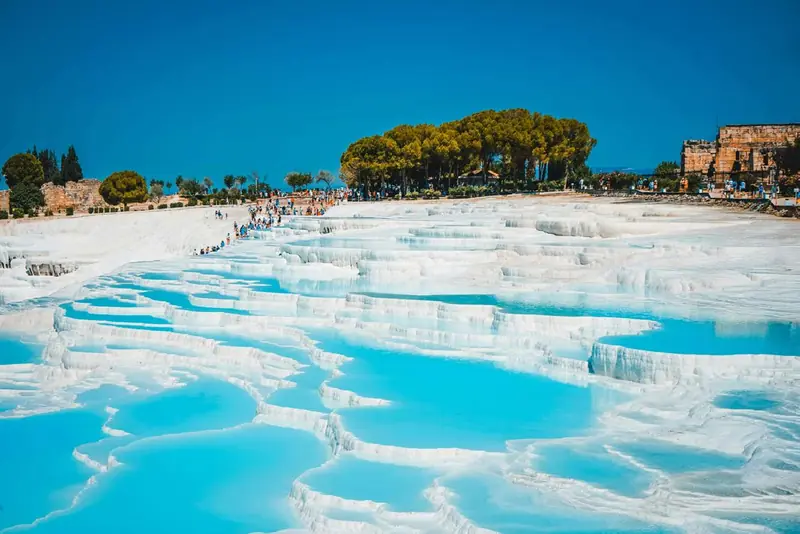
Pamukkale, in Denizli, is a single whole made up of white travertine terraces, formed by the lime deposited by thermal waters, and the ancient city of Hierapolis just above them. Highlights of a visit are walking barefoot along the designated paths on the travertines, the ancient theatre, necropolis and Temple of Apollo at Hierapolis, and the antique pool area. As nature and history are in the same place, setting aside half a day lets you see the site without rushing.
How were the travertines formed?
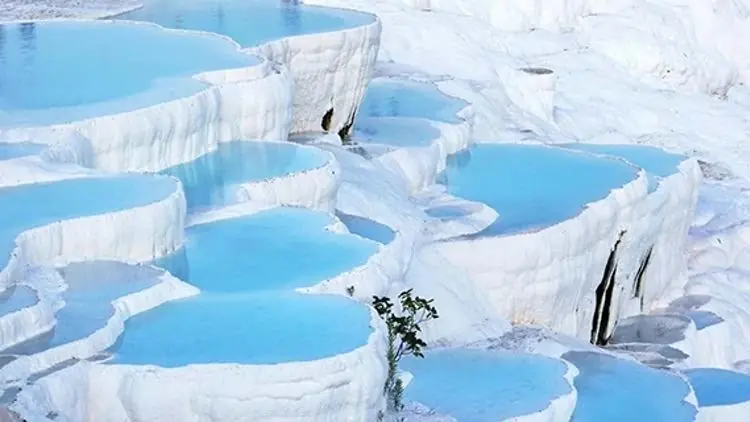
The hot springs in the area carry dissolved lime as they rise from underground. As the water flows down the slope, its carbon dioxide escapes into the air and the lime precipitates, building up in white layers. Over thousands of years this process created a white hillside adorned with stepped pools and stalactites. The name "Pamukkale" (cotton castle) comes from this cotton-white appearance.
Pamukkale and Hierapolis are together on the UNESCO World Heritage List. To protect the travertines, the site management decides which pools receive water and which parts visitors may walk on.
Walking on the travertines
To keep the white surface of the travertines from being damaged, you usually walk with your shoes off and only on permitted paths. The rules may change from time to time; follow the instructions of the staff on site.
- For your feet: The surface is rough in some places and slippery in others. Walk slowly.
- Shoe bag: A small cloth bag makes it easier to carry the shoes you have taken off.
- Sunglasses: The white surface reflects the sun and tires the eyes.
- Roll up your trousers: Your trousers may get wet as you wade through the shallow pools.
What to see in the ancient city of Hierapolis
Hierapolis was founded in the Hellenistic period and became a healing centre in Roman times thanks to its thermal waters. As the site is large, focusing on the highlights is a good approach.
Ancient theatre
One of the most impressive surviving buildings in the city. The reliefs on the stage building and the view from the tiers down towards the travertines are striking. The climb up to the theatre is uphill, so it can be a little tiring in the hot hours.
Temple of Apollo and the Plutonion
The remains of the Temple of Apollo stand in the city's religious centre. Next to it, the Plutonion is a sacred site known for its poisonous gases, seen in antiquity as a gateway to the underworld.
Roman baths and colonnaded street
The city's main street runs between columns and the remains of shops on both sides. Monumental gates to the north and south mark the two ends of the street. Much of the Roman baths still stands today, impressive in size.
Necropolis
The necropolis of Hierapolis is known as one of the largest ancient cemeteries in Anatolia. Sarcophagi, tumuli and house-shaped tombs from different periods bear witness to the many people who came here for healing and died here.
Cleopatra's Pool (the Antique Pool)
This pool, filled with thermal water and with fragments of ancient columns on its bottom, is called by this name because legend associates it with Cleopatra. There is a separate charge to swim in the pool; check current conditions before you go. Even if you are not going in, it is pleasant to sit around it and watch the clear water.
Karahayıt red springs
At Karahayıt, near Pamukkale, the thermal water leaves reddish and orange deposits because of its iron and mineral content. After the white travertines, this change of colour makes an interesting comparison.
When to go
Spring and autumn are the most comfortable times for walking on the travertines and exploring Hierapolis. In summer, the sun reflected off the white surface and the heat can be tiring; choose the early hours. In winter, the weather is cold but the thermal water stays warm; walking barefoot may feel chilly, though. We explain what to wear in each season in our article on what to wear on an Aegean tour.
Seeing Pamukkale on a tour programme
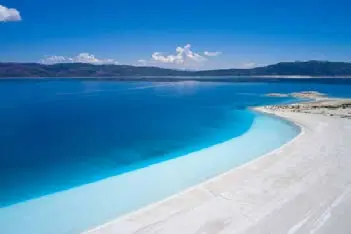
Both of TatiliYakala's Aegean programmes stop at Pamukkale. On the Salda Lake, Pamukkale, Ephesus, Kuşadası and Şirince tour, day two takes in the Pamukkale travertines after Salda Lake, and at Hierapolis the theatre, baths, gymnasium, Temple of Apollo, Plutonion and necropolis. On the Ephesus, Kuşadası, Çeşme, Alaçatı and Pamukkale tour, the last day's programme includes Hierapolis, the travertines, free time around Cleopatra's Pool and the Karahayıt red springs.
A suggested order for your visit
The order you follow at Pamukkale determines your energy and your time. Many visitors start at the top, from the Hierapolis side: first the colonnaded street, the baths and the theatre, then a break around the antique pool, and finally down to the travertines. This order means you climb the hill only once and end the day relaxing in the warm water on the travertines. For photos, remember that the travertines take on pink and golden tones in the late afternoon light, so the hours close to sunset are especially beautiful.
Frequently asked questions
Can you walk on the Pamukkale travertines in shoes?
Usually not. To protect the travertines, shoes are taken off and you walk on the designated paths. Current rules are set by the site management.
Can you swim in the pools at Pamukkale?
You can put your feet in the water in designated sections of the shallow pools on the travertines. Cleopatra's Pool (the Antique Pool), on the other hand, is an area with a separate entry charge.
How many hours does it take to see Pamukkale?
You need to allow at least a few hours for the travertines and the highlights of Hierapolis. If you add the pool and Karahayıt, it comes to half a day.
Can you visit Pamukkale in winter?
Yes, you can visit in winter too. The thermal water stays warm, but the weather can be cold; take this into account for walking barefoot.
Can you see Pamukkale and Salda Lake on the same day?
Yes, the two places are close to each other by road, so many programmes put them on the same day. For details on Salda Lake, see the Salda Lake travel guide.